Cooking & kitchen appliances


The oven, stovetop, and range hood are among the most important appliances in a kitchen. But which appliances suit your cooking habits? Which features are truly useful, and what should you consider when planning your kitchen? We’ll show you what matters most when making your selection and how to best integrate these appliances into your kitchen.
What kitchen appliances do I need for cooking?
The most important appliances for the cooking area include the oven, cooktop, and range hood. Anyone planning a new kitchen should start thinking about the appliances early on. That’s because they influence not only the cooking process itself, but also the layout, storage space, and design of the kitchen.
Therefore, the key is not to include as many features as possible. A much more important question is: How do you cook on a daily basis? Someone who regularly cooks for several people will have different needs for a cooktop and oven than a small household. Someone who enjoys baking, in turn, will prioritize different features than someone who mainly prepares quick meals on the cooktop.


An overview of the most important devices:
Oven:
For baking, roasting, and cooking. Depending on the model, additional features such as steam cooking, a microwave, or a self-cleaning function may be included.
Stove:
The main area for cooking and frying. Options include induction, electric, and gas cooktops, among others.
Range hood:
Absorbs cooking fumes, grease, and odors. It can be installed above the cooktop or integrated directly into the cooktop.
Choosing an Oven: Which Features Are Useful?
Modern ovens offer a wide range of programs and additional features. Which ones are useful depends primarily on your personal cooking and baking habits. That’s why it’s worth considering, before making a choice, what the oven will actually be used for and how often.
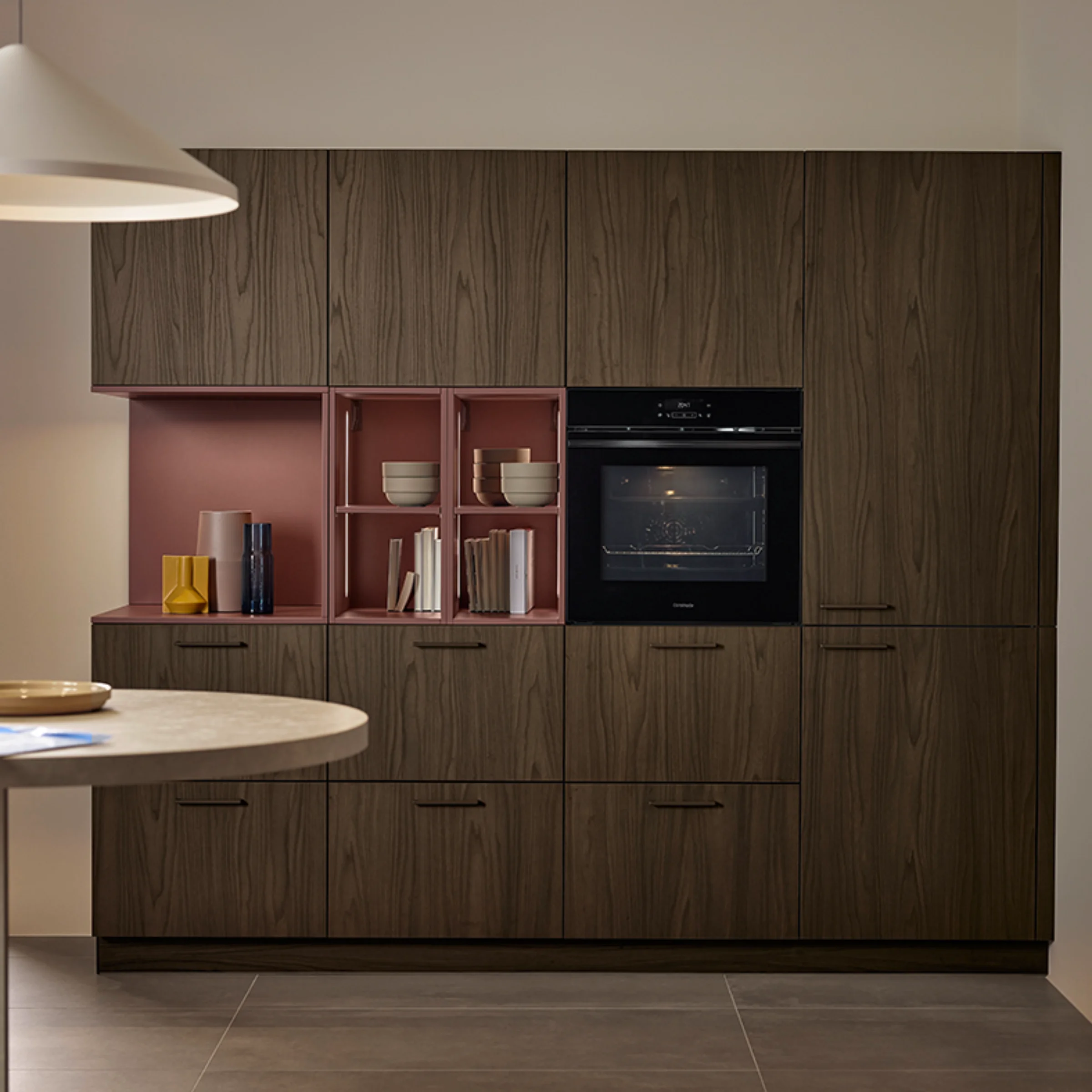
What types of heating elements does an oven need?
Top/bottom heat, convection, and hot air are standard features in many ovens. While top/bottom heat generates heat from above and below, a fan in convection or hot air modes circulates the warm air throughout the cooking chamber.
If you frequently prepare a variety of dishes or want to use multiple racks at the same time, you should look for flexible heating modes when selecting an appliance. Additional programs can enhance convenience, but they should align with your own cooking habits.
Steam Oven: When Is This Feature Worth It?
Steam can complement traditional baking and cooking. Depending on the appliance, moisture may be added during the cooking process, or the appliance may allow for more thorough steam cooking.
This can be particularly useful for items such as bread and pastries, vegetables, fish, or other delicate foods. Those who regularly use these cooking methods can benefit from a feature like this. On the other hand, those who mainly use traditional oven programs may not need it.
Cleaning the Oven: Pyrolysis and Other Cleaning Systems
When choosing an oven, it’s also worth considering the cleaning options. Pyrolysis is a particularly well-known method: the cooking chamber is heated to a very high temperature, causing food residue and grime to break down so they can then be removed.
There are also other cleaning systems, such as those that use water or steam, or that feature special coatings to make cleaning easier.
Which option makes the most sense depends in part on how often the oven is used. Those who bake and roast regularly can particularly benefit from a convenient self-cleaning function.
There are also other cleaning systems, such as those that use water or steam, or that feature special coatings to make cleaning easier.
Which option makes the most sense depends in part on how often the oven is used. Those who bake and roast regularly can particularly benefit from a convenient self-cleaning function.

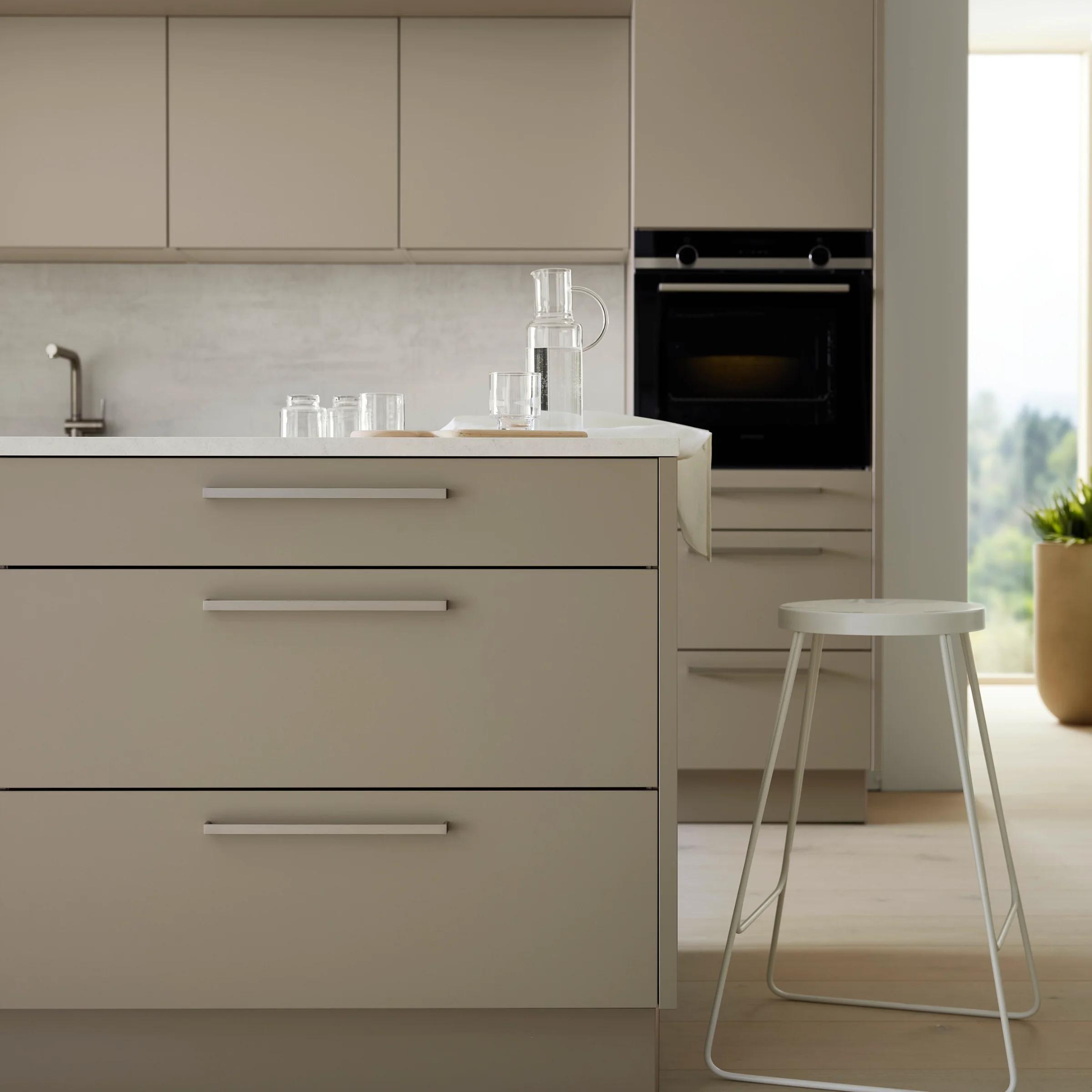
Oven with Microwave: Two Appliances in One
An oven with a built-in microwave combines two functions in one appliance. This can be especially convenient when space is limited or if you want to avoid having a separate microwave.
Especially in small kitchens, it’s worth incorporating multi-function appliances into your design. This leaves more room for counter space and storage. Even in compact kitchens, thoughtful planning can successfully combine functionality, storage, and design.
Where should the oven be installed in the kitchen?
Traditionally, the oven can be installed below the cooktop. In modern kitchen designs, however, it is often placed in a side cabinet at a convenient height.
This has several advantages: the oven cavity is easier to see into, baking sheets and pans are easier to insert and remove, and the cooktop and oven do not have to be positioned directly above each other.
The optimal position depends on the room layout and personal habits. It is important to plan the oven’s location in conjunction with counter space, storage, and the other functional areas.

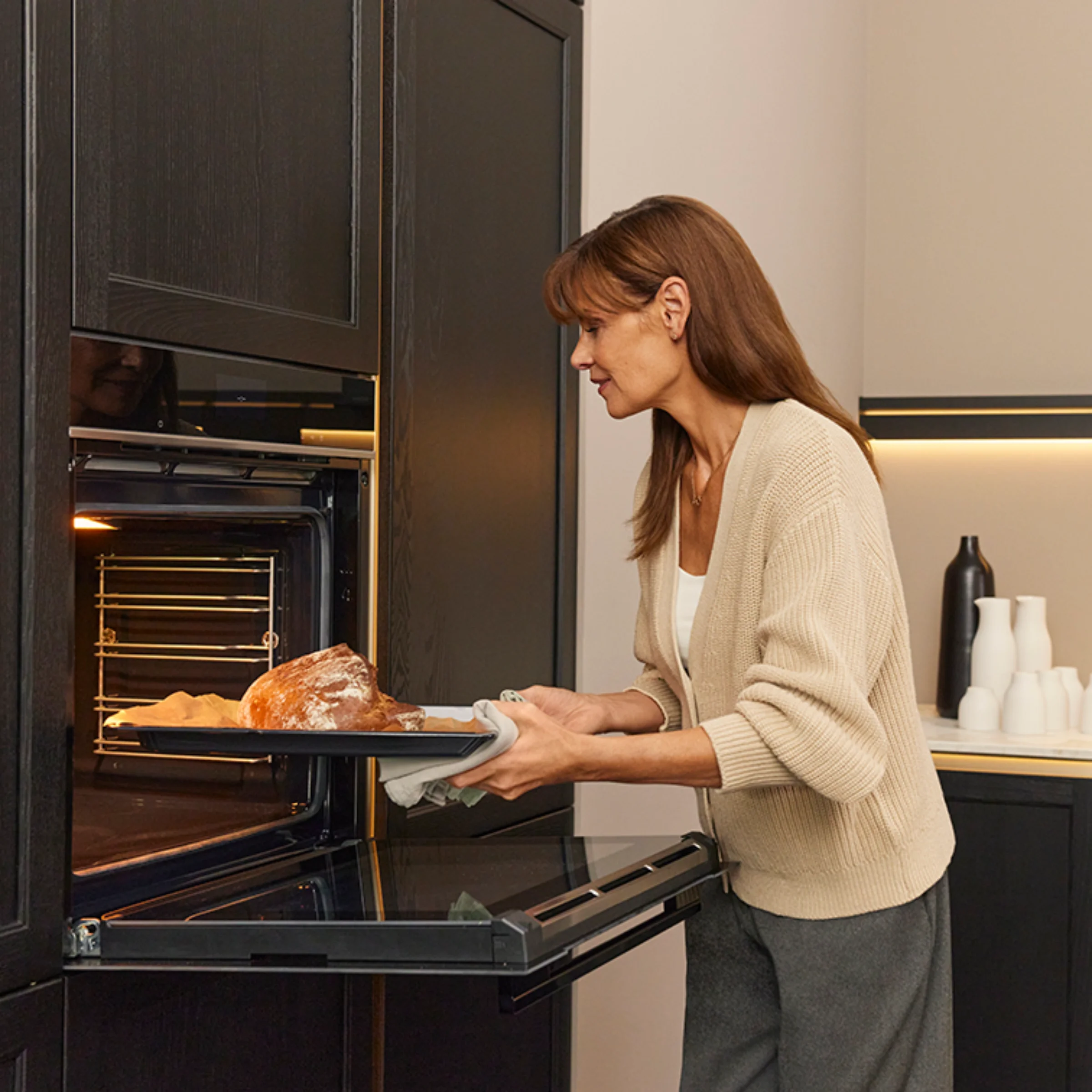
Considering Ergonomics
It’s not just the appliances themselves, but also their placement that affects convenience. For example, a high-mounted oven may be easier to reach, while frequently used cooking utensils can be stored directly below or next to the cooktop.
The goal is a kitchen in which the individual steps of meal preparation flow together as naturally as possible.
What should you look for when buying an oven?
Which features make sense depends primarily on how you use the oven. When making your selection, pay particular attention to:
- appropriate heating modes and programs
- steam or microwave functions, if you use them regularly
- a convenient cleaning system, such as pyrolysis
- the right size and installation height
- controls that suit your habits
Choosing a cooktop: Which one is right for my kitchen?
The cooktop is one of the most frequently used areas of the kitchen. In addition to the type of heat source, factors such as size, the layout of the cooking zones, ease of use, and ease of cleaning also play an important role.
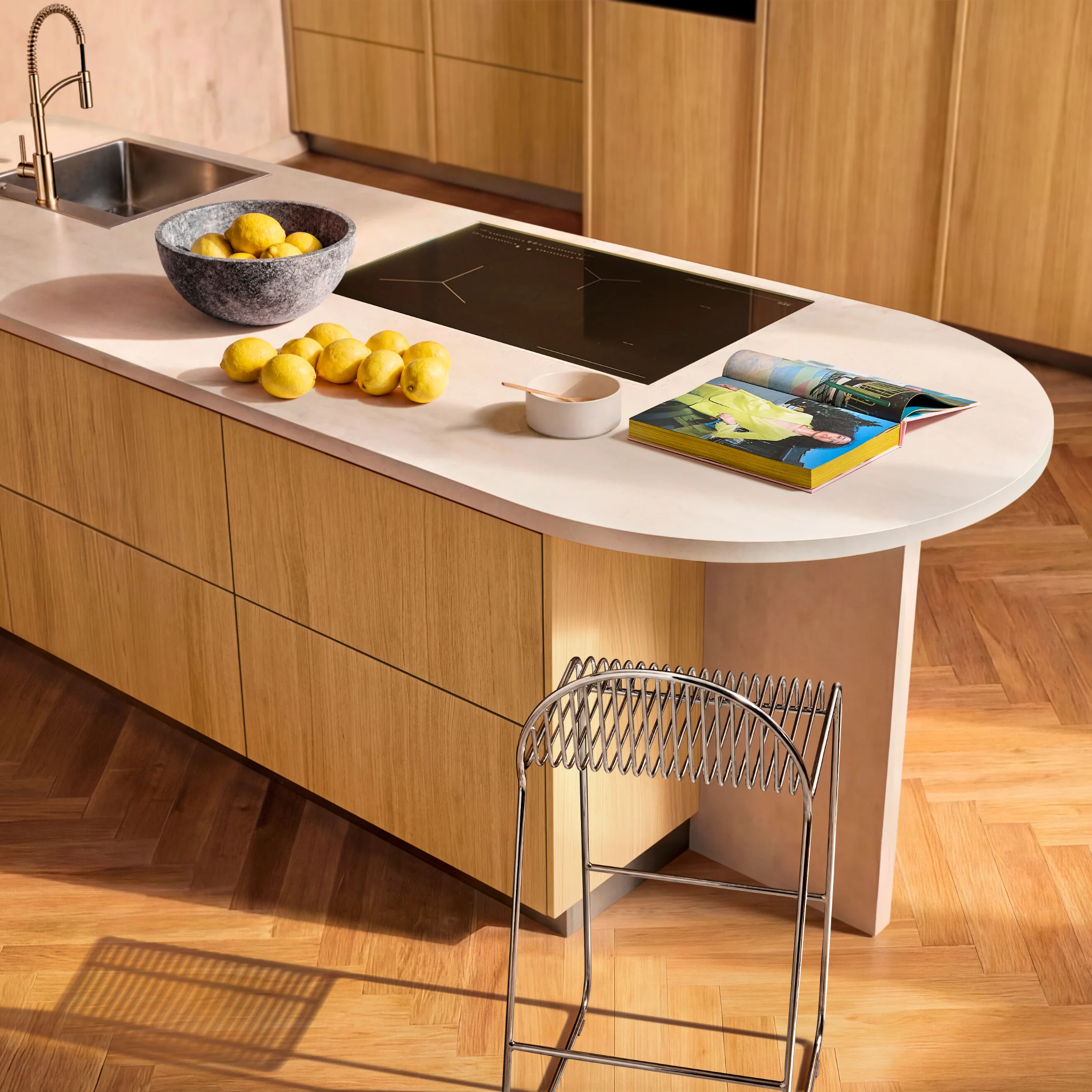
Induction, electric, or gas?
Induction
For fast, precisely controllable cooking and ease of use
Electric/Glass-Ceramic
for a classic solution and a wide selection of suitable cookware
Gas
for directly adjustable heat and cooking over an open flame
When are flexible cooking zones a good idea?
Depending on the cooktop, flexible cooking zones can be combined to form a larger cooking area. This offers more freedom when placing pots, large pans, or roasting pans and is especially convenient when you frequently use cookware of different sizes.
How big should a cooktop be?
The right width depends on the available space and on how many pots and pans you regularly use at the same time.
A 60-cm-wide cooktop may be sufficient for smaller households and compact kitchens. Those who frequently cook with several large pots or pans may benefit from an 80- or 90-cm-wide cooktop.
However, it’s not just the outer width that matters. The size and layout of the individual cooking zones should also match your cookware.
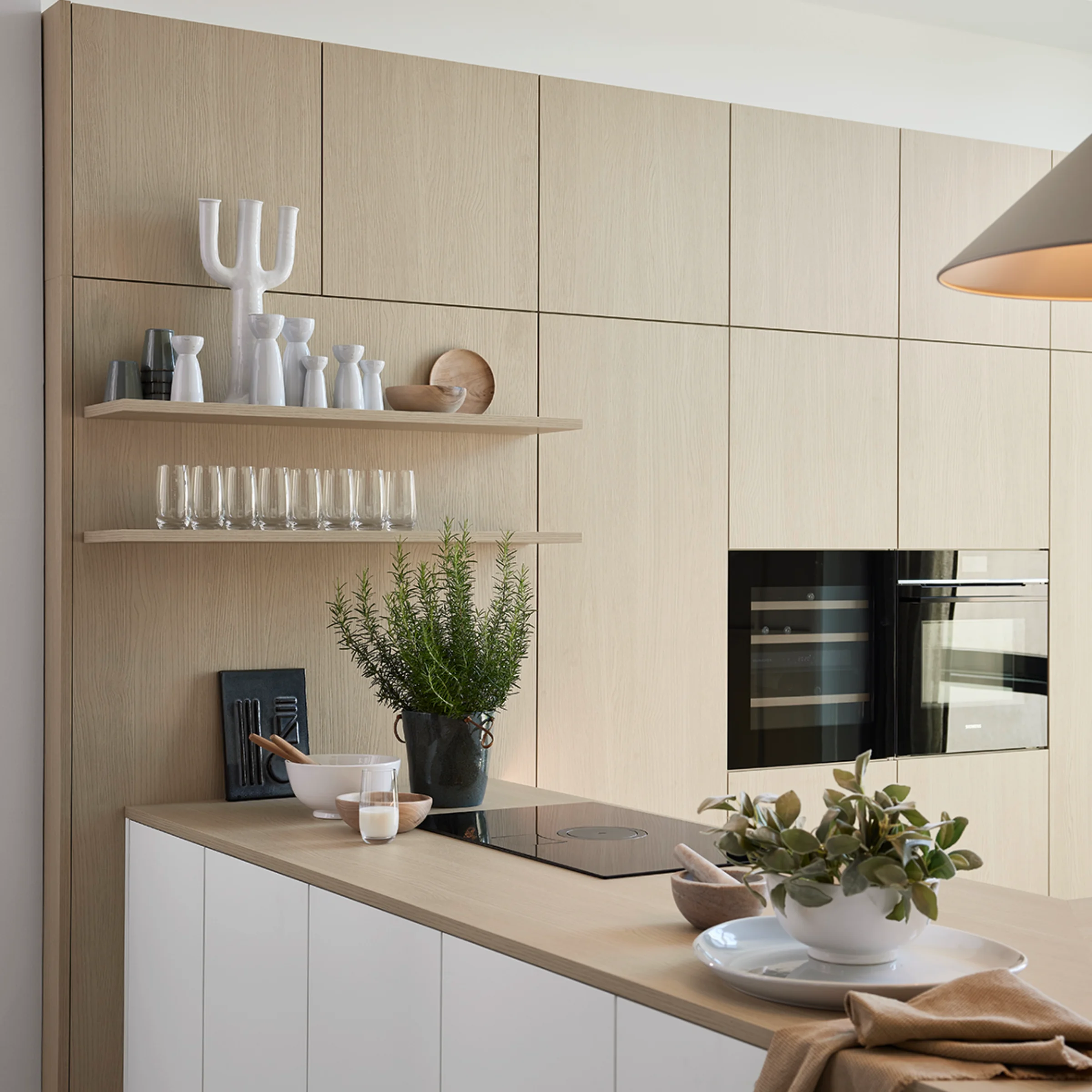
When are flexible cooking zones a good idea?
On cooktops with flexible cooking zones, individual areas can be combined to form a larger cooking surface, depending on the appliance. This allows for more flexible placement of larger pans or roasting pans, for example.
If you frequently use a variety of cookware or large pots and pans, this gives you more freedom while cooking.
Planning a Range Hood: Overhead or Built-in?
Cooking produces steam, grease, and odors. That’s why a suitable range hood is an essential part of functional kitchen design. Generally, you can choose between a traditional range hood mounted above the cooktop and a range hood integrated into or next to the cooktop.
Which solution is more suitable depends, among other things, on the kitchen’s layout, the position of the cooktop, and your personal design preferences.
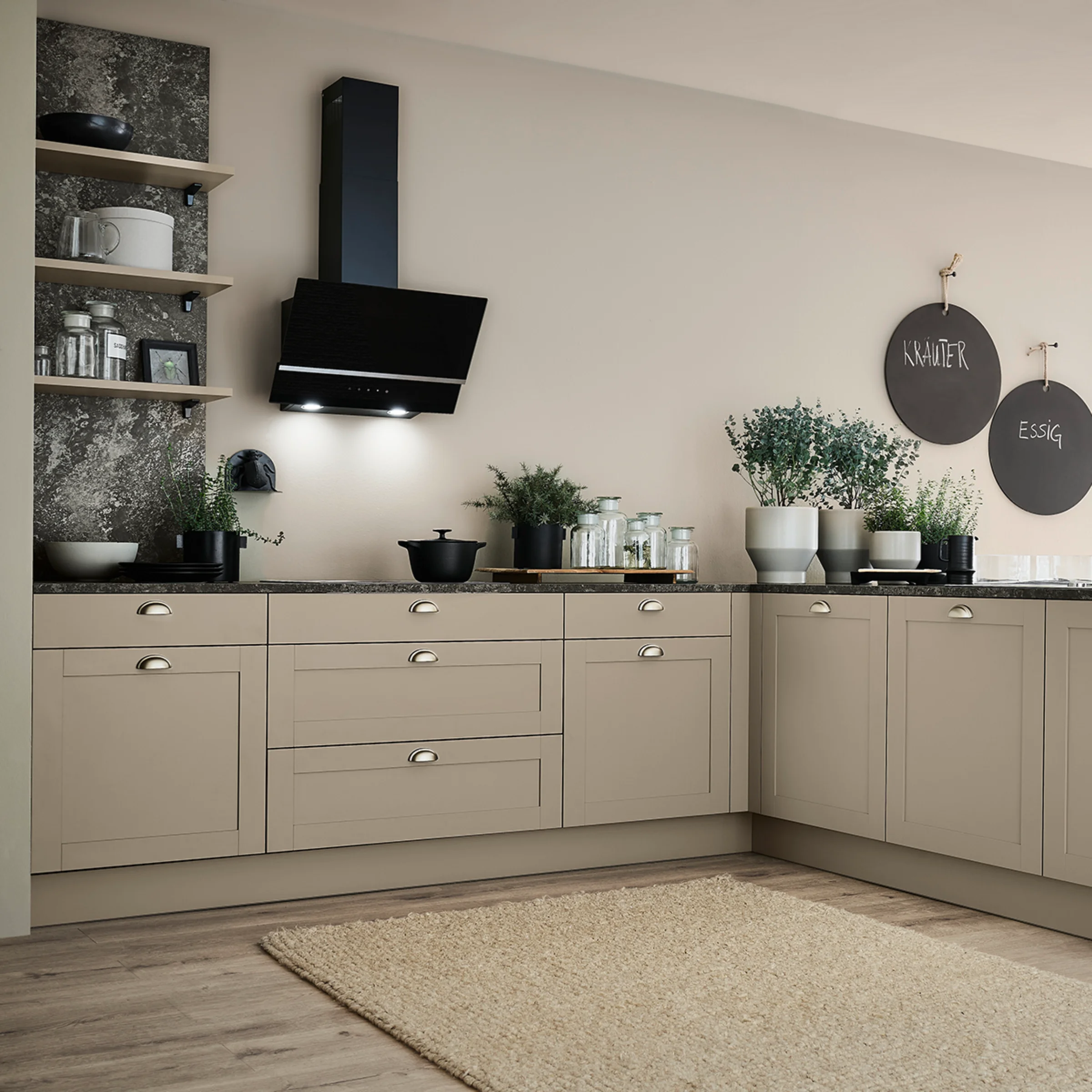
Classic Range Hood
Range hoods are installed above the cooktop and are available in various designs. Depending on the layout, they can be used as a visible design element or integrated into the kitchen as discreetly as possible.
There are numerous options available, especially for cooktops installed against a wall.
Cooktop Hoods at a Glance:
- is mounted above the cooktop
- many different designs
- Can be intentionally visible or discreetly integrated
- does not require a utility space directly beneath the cooktop

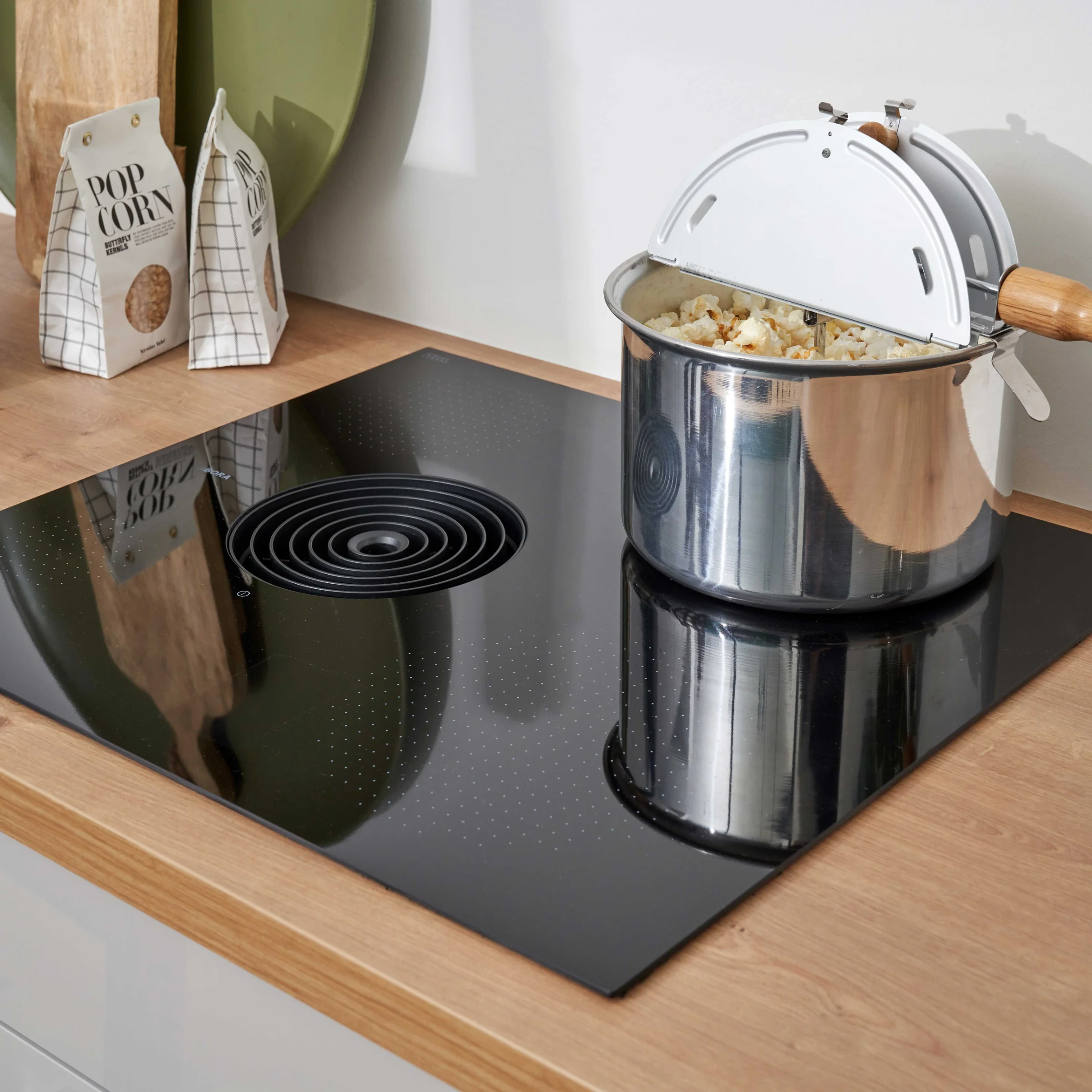
Cooktop with built-in range hood
With a cooktop range hood, cooking fumes are extracted downward directly at the cooktop. This keeps the area above the cooktop clear.
This can offer design advantages, particularly for kitchen islands and open-concept kitchens. At the same time, it’s important to note that, depending on the system, the ventilation technology may require space beneath the cooktop, which can affect the available storage space.
Therefore, the cooktop, range hood, and base cabinet should be planned together from the very beginning.
Hob Hood at a Glance:
- extracts cooking fumes directly at the cooktop
- keeps the space above the cooktop clear
- particularly suitable for kitchen islands and open-concept kitchens
- may require storage space in the base cabinet, depending on the system
Recirculating Air or Exhaust Air: What's the Difference?
In an exhaust system, the air drawn in is vented outside through a duct. In a recirculating system, the air is filtered and then returned to the room.
Which solution is appropriate depends largely on the building’s structural conditions. An exhaust system requires a suitable connection to the outside, while a recirculating system can offer more flexibility in positioning the cooking area.
The building’s requirements and any existing ventilation systems should also be taken into account during the planning phase.
Planning the Oven, Stove, and Range Hood Together
No matter how well-equipped individual appliances may be, what really matters in everyday life is that the cooktop, oven, countertop, and storage space work together seamlessly.
That’s why selecting appliances should be part of the kitchen planning process as early as possible. It’s not just about features and design—installation locations, workflow, storage space, and the layout of the room should all be coordinated.
A nolte partner will help you view the right appliances and your kitchen design as a comprehensive solution—tailored to your space, your cooking habits, and your personal preferences.
That’s why selecting appliances should be part of the kitchen planning process as early as possible. It’s not just about features and design—installation locations, workflow, storage space, and the layout of the room should all be coordinated.
A nolte partner will help you view the right appliances and your kitchen design as a comprehensive solution—tailored to your space, your cooking habits, and your personal preferences.

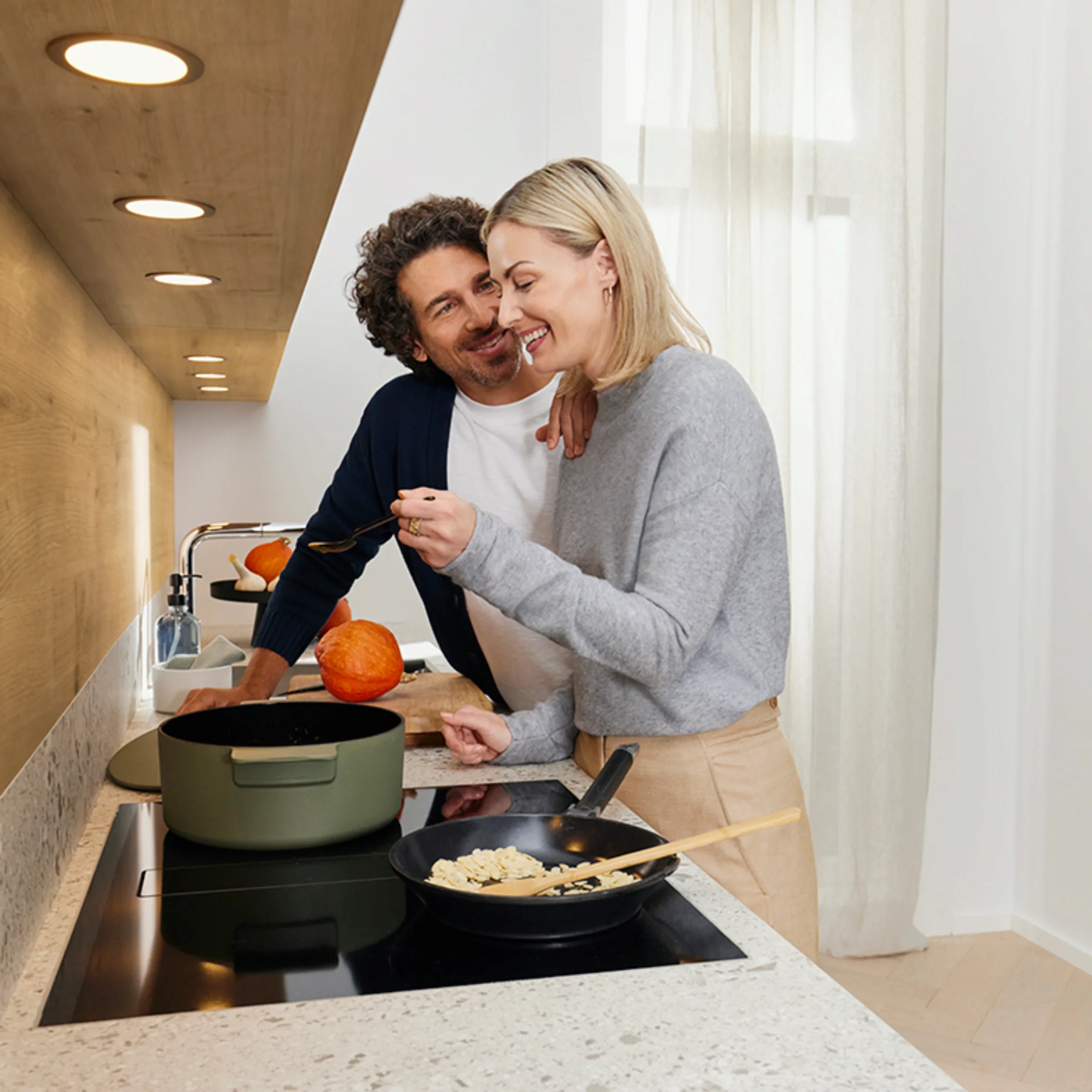
Here's what you should keep in mind when planning your kitchen area
nolte Expert Tip
- Workflow: Arrange the cooktop, sink, and countertop in a logical layout.
- Storage: Store pots, pans, spices, and cooking utensils near the cooktop.
- Ergonomics: Adjust the installation height and position of the oven to suit your personal needs.
- Countertop: Allow for sufficient space for food preparation and setting items aside.
- Range hood: Determine early on which solution fits the kitchen layout and structural requirements.
Creating Short Paths
Cooking utensils, pots, pans, spices, and frequently used ingredients should be stored as close as possible to where they’re needed. Pull-out shelves and drawers near the cooktop, for example, are ideal for spices, oils, and cooking utensils.
Nolte also recommends, when planning the interior layout, to take functional zones into account from the very beginning and to place cooking utensils in the immediate vicinity of the cooktop. This keeps distances short and ensures a smooth workflow.
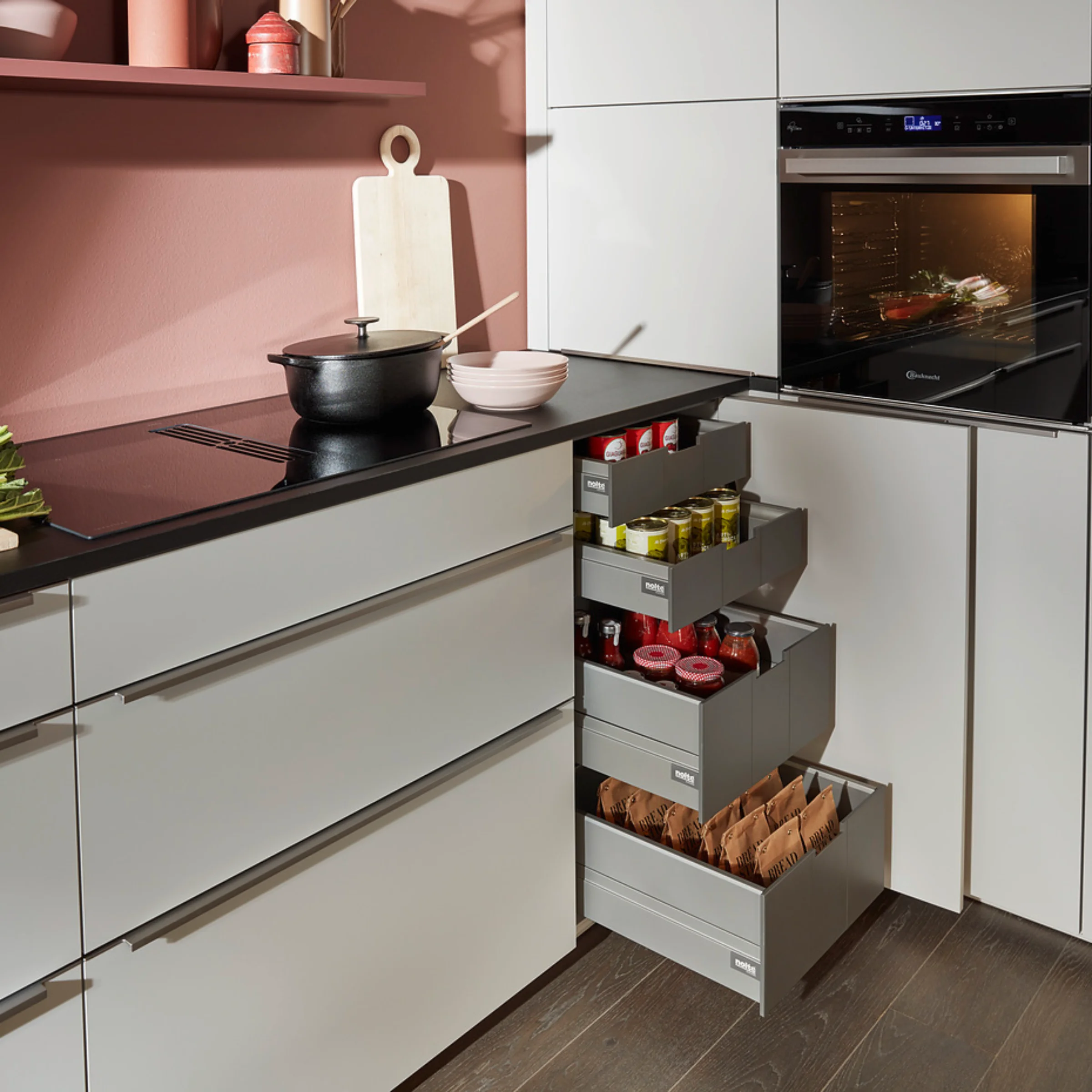
Make sure to allow for enough counter space
There should be enough space around the cooktop for food preparation and storage. A continuous countertop between key functional areas—such as the sink and the cooktop—is particularly practical.
In small kitchens, planning must be done with particular care: Compact appliances can help preserve valuable counter space. For example, nolte’s design ideas for small spaces also point out that narrow appliances and compact sinks can free up more counter space.
In small kitchens, planning must be done with particular care: Compact appliances can help preserve valuable counter space. For example, nolte’s design ideas for small spaces also point out that narrow appliances and compact sinks can free up more counter space.

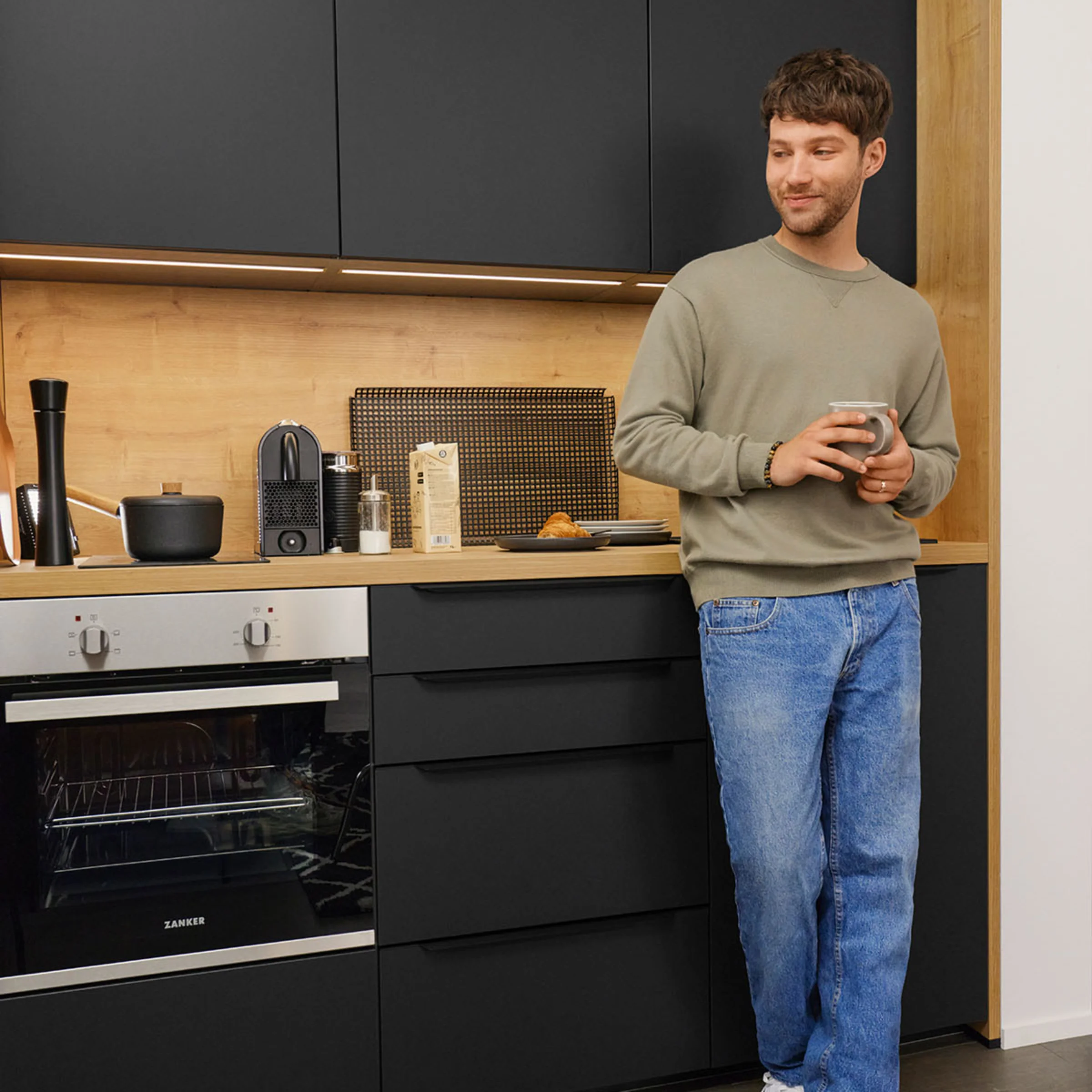
What kind of cook are you?
Not every kitchen needs the same appliances. That’s why your own habits are a good guide when choosing appliances.
The Quick Everyday Cook
Do you need things to be simple, especially during the week? If so, intuitive controls, quick preheating times, and easy cleaning may be more important than a wide range of special programs.
The Ambitious Amateur Cook
If you cook frequently and prepare elaborate meals, you’ll need space and flexibility. A spacious cooktop, flexible cooking zones, and versatile oven functions can be particularly appealing in this case. You should also make sure there’s enough storage space for pots, pans, and cooking utensils.
The Passionate Amateur Baker
For those who love bread, cakes, and pastries, the oven takes center stage. Different heating modes, even heat distribution, steam functions, and easy cleaning can play a major role in the selection process.
FAQs