Kitchen Sinks & Taps: How to Choose the Right Ones
In addition to design, the most important factors are the material, size, installation type, features, and your individual habits in everyday kitchen use. Stainless steel, ceramic, and granite composite each offer different properties, while for kitchen faucets, factors such as the spout, spray head, and connection type play a role. This guide explains what to look for when choosing a kitchen sink and faucet and how to plan your sink area so that it’s functional and complements your kitchen.
In a nutshell:
A good kitchen sink should be suited to the available space, usage habits, and kitchen design. When it comes to the faucet, in addition to appearance and ease of use, the correct height, the spout, and the type of connection are particularly important. The sink, faucet, and countertop should therefore be planned together whenever possible.
Which kitchen sink is the right one?
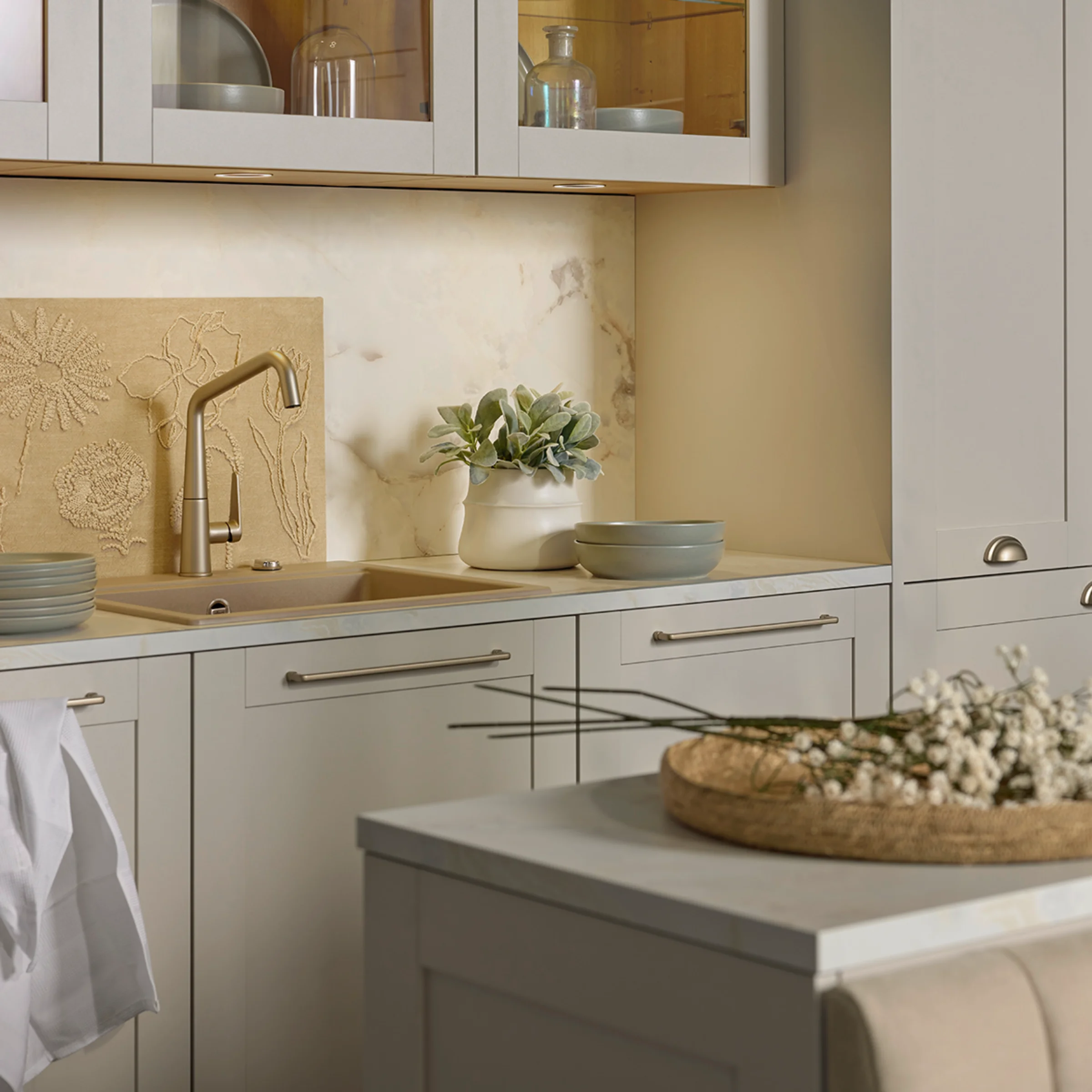
Choosing the right kitchen sink depends primarily on how much space is available and how the sink area is used on a daily basis. For example,if you frequently wash large pots, pans, or baking sheets by hand, you’ll benefit from a large, deep basin. If you mainly use the dishwasher, a compact single-bowl sink may be sufficient. An additional drying rack provides space for washed dishes and can also be handy when preparing food.
When making your selection, you should pay particular attention to these points:
- Size and depth of the sink
- Single or double sink
- With or without a drying rack
- Available counter space
- Size of the sink cabinet
- Personal usage habits

What is the best material for a kitchen sink?
The best material for a kitchen sink depends on your personal preferences regarding appearance, ease of care, and durability. Stainless steel is timeless, hygienic, and sturdy, and it pairs well with many kitchen styles. Sinks made of granite composite or other quartz composite materials offer a stone-like appearance and a wide range of colors and finishes. Ceramic is also easy to clean and scratch-resistant, but it can be more susceptible to damage from hard impacts. That’s why there isn’t a single material that’s the best choice for every kitchen. The key factor is which features are particularly important for your individual kitchen routine.
A Comparison of Materials for Kitchen Sinks
Stainless steel
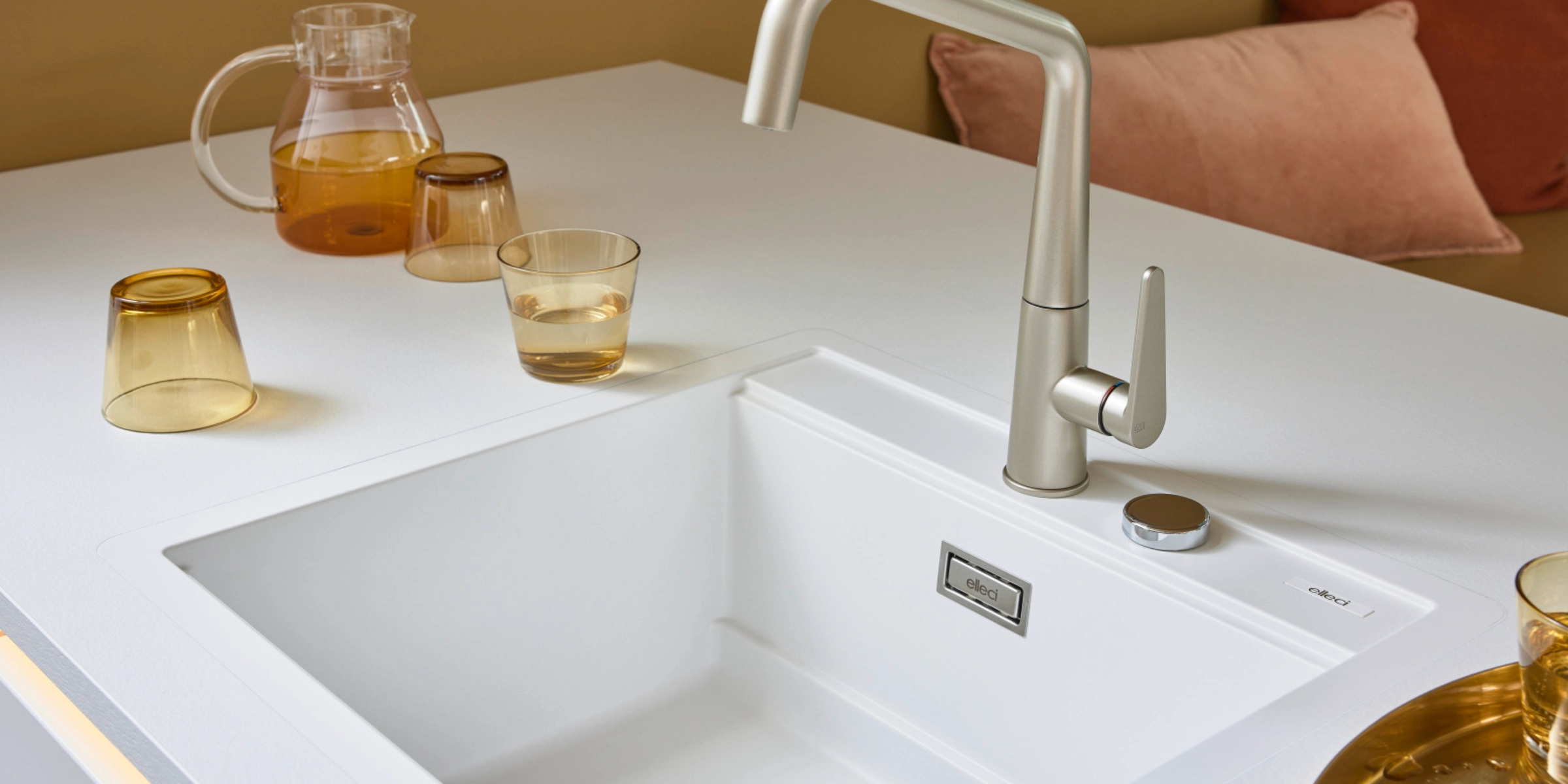
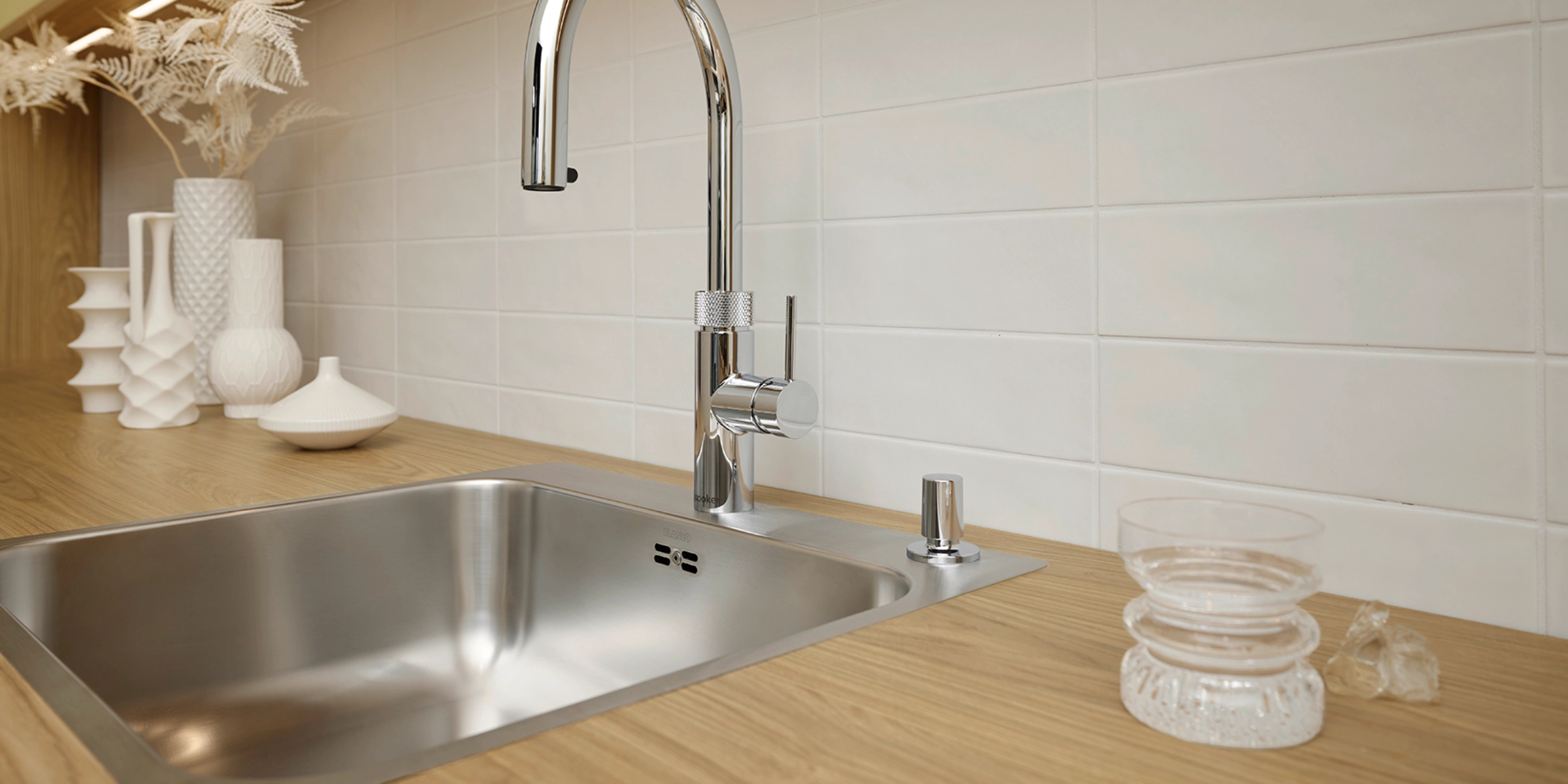
Stainless steel is a tried-and-true material for kitchen sinks, and its timeless look makes it a great fit for many kitchen styles. The material is hygienic, durable, heat-resistant, and easy to clean. However, water and limescale marks may become visible on the metallic surface.
- Appearance: timeless and metallic
- Features: durable, hygienic, and heat-resistant
- Care: straightforward; water and limescale marks may be visible
- Pairs particularly well with: many different kitchen styles
Granite and Quartz Composite
Sinks made of granite or quartz composite are characterized by their stone-like appearance and high durability. A particular advantage is the wide selection of colors and finishes, which allows the sink to be specifically matched to the countertop and kitchen design. These materials are also relatively easy to maintain in everyday use.
- Appearance: modern and stone-like
- Properties: durable and long-lasting
- Maintenance: relatively easy to maintain
- Color selection: wide variety of colors and finishes
- Particularly well-suited for: Kitchens where the sink and countertop are to be design-coordinated
Ceramics
Ceramic sinks stand out for their high-quality, smooth surface and are suitable for both classic and modern kitchens. The material is easy to clean and scratch-resistant. However, ceramic can be more susceptible to damage from heavy or hard objects that strike it with force.
- Appearance: high-quality and smooth
- Features: scratch-resistant and durable
- Care: easy to maintain
- Note: more susceptible to strong impacts
- Pairs particularly well with: classic and modern kitchen designs
Which kitchen sink is particularly easy to maintain?
Stainless steel, ceramic, and high-quality composite sinks are generally considered low-maintenance materials, but they differ in their care requirements. Which sink is easiest to keep clean also depends on the surface, color, and usage. With stainless steel, for example, water and limescale marks may become visible on the surface, while light-colored limescale deposits may stand out more on dark sinks. For regular cleaning, a soft cloth and a suitable mild cleaning agent are sufficient for many surfaces. Aggressive or highly abrasive cleaning agents should only be used if they are explicitly suitable for the material in question. Therefore, the manufacturer’s care instructions are always decisive.
What are the different installation types for kitchen sinks?
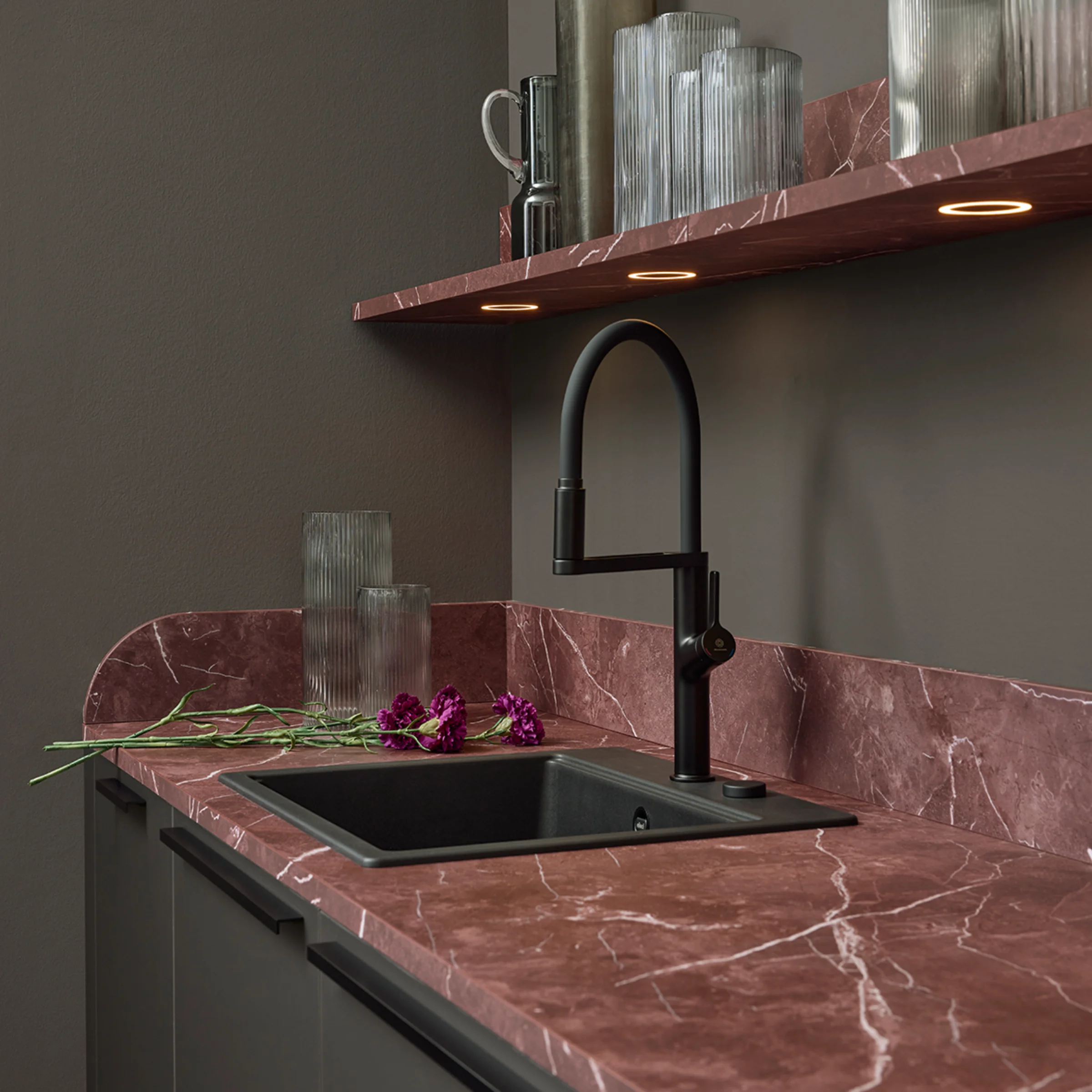
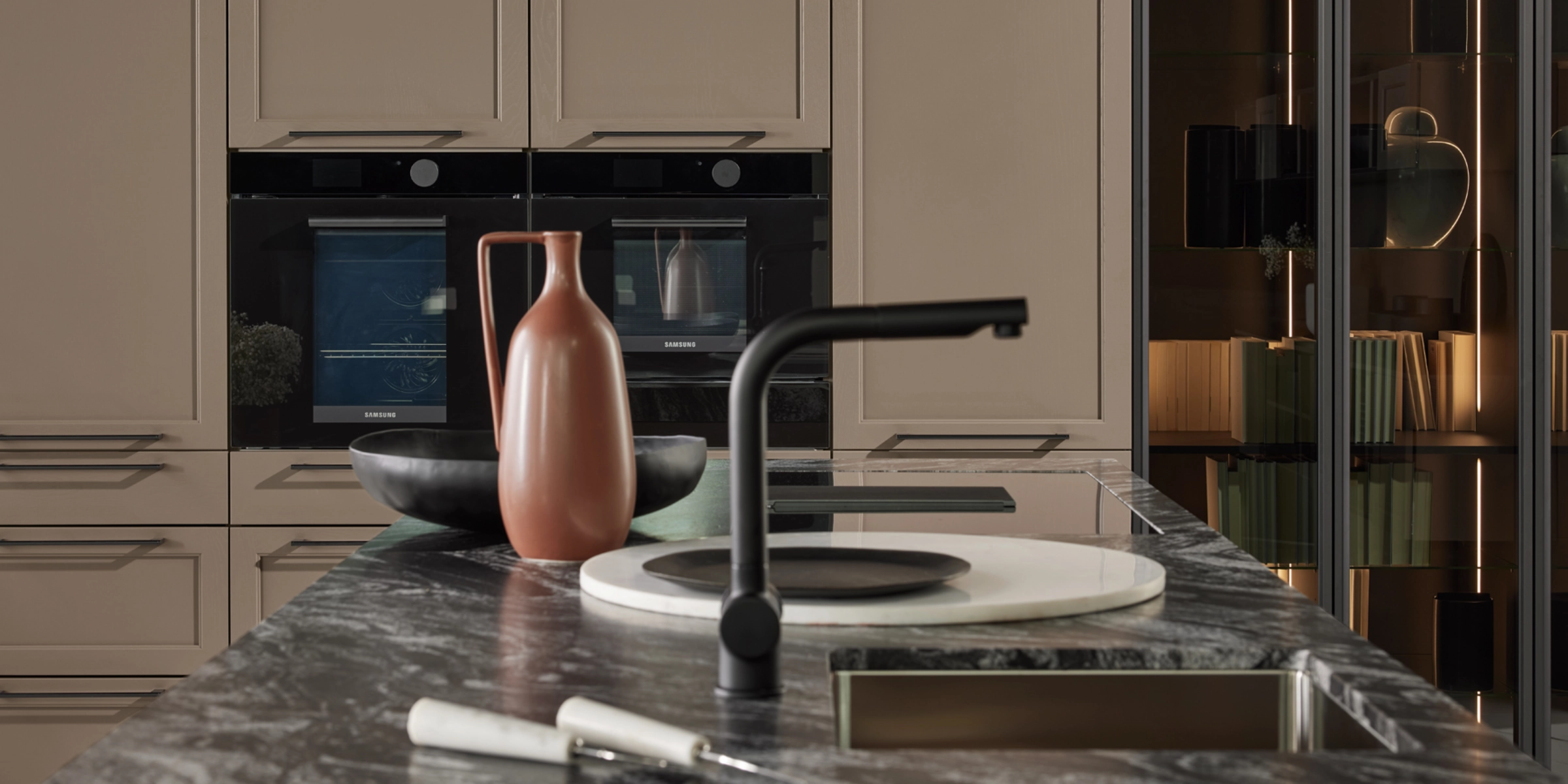
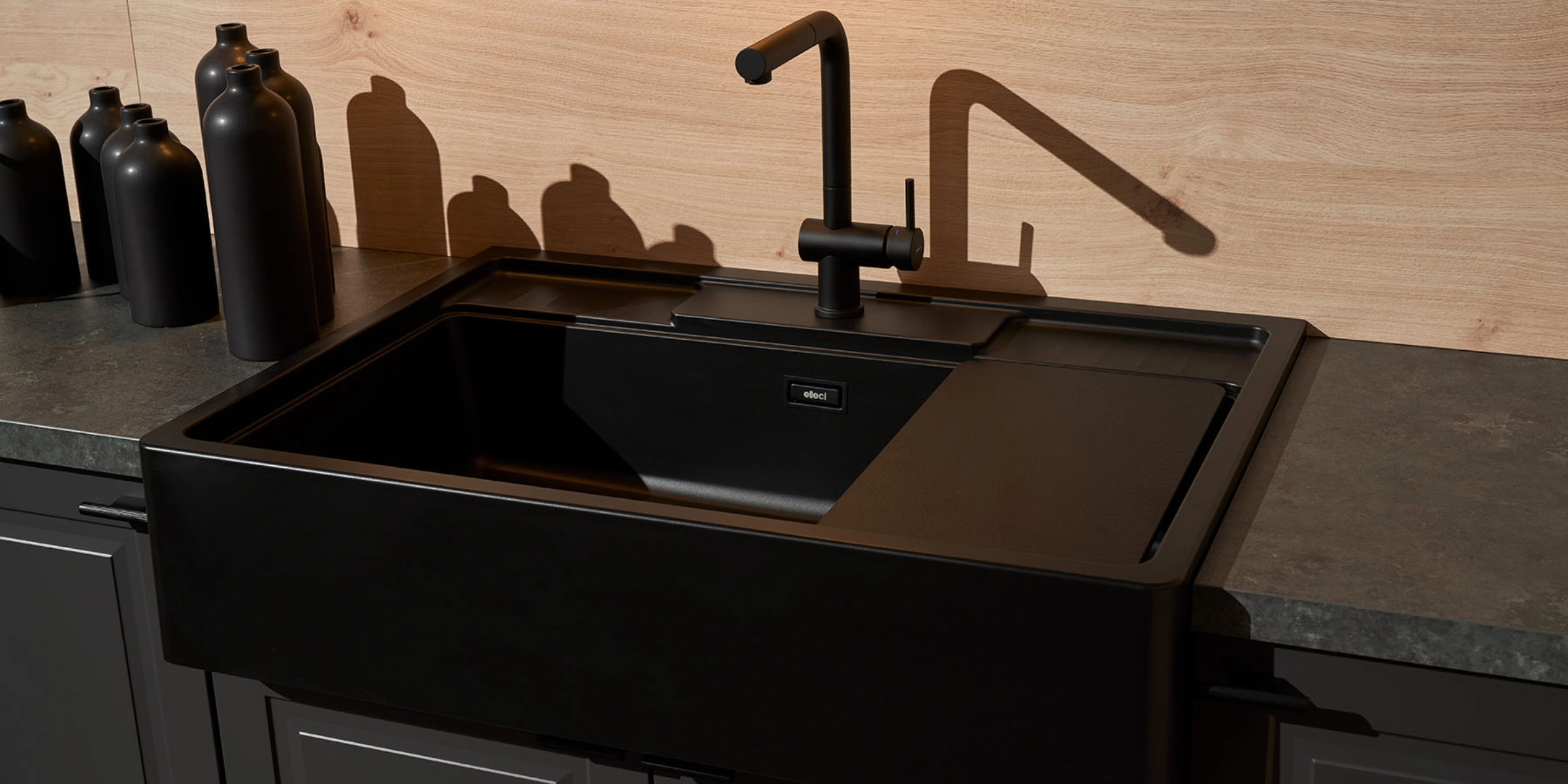
Kitchen sinks can be installed as top-mount, flush-mount, or undermount sinks integrated into the countertop. With a top-mount sink, the rim rests visibly on the countertop and visually separates the basin from the surface. Flush-mount sinks are installed so that the sink rim and countertop form a single plane as much as possible. With an undermount sink, the sink rim is located beneath the countertop, creating a seamless surface. Which installation type is possible and appropriate depends not only on the desired look but also, in particular, on the type of countertop used and the specific sink model.
What should you keep in mind when buying a kitchen faucet?
When choosing a kitchen faucet, you should consider the height, spout, ease of use, connection type, and the sink’s position. The water stream should reach the sink basin easily without unnecessarily splashing water over the edge. A spout that’s tall enough makes it easier to fill large pots and containers. Kitchen faucets with a pull-out spout or flexible spray hose are particularly versatile.
Here's what to look for in a kitchen faucet:
- Height: enough space for large pots and pans
- Spout: suited to the size and position of the sink
- Swivel range: particularly important for larger or multiple sinks
- Spray function: greater flexibility when washing dishes and cleaning
- Connection type: high-pressure or low-pressure, depending on the hot water supply
- Window: Plan for a window-mounted faucet if necessary
- Design: Match the color and finish to the sink and kitchen
What is the difference between high-pressure and low-pressure fittings?
A high-pressure faucet is connected directly to the central hot and cold water supply, while a low-pressure faucet is designed for use with a non-pressurized hot-water storage tank. Which type is needed therefore depends on the hot-water supply in the kitchen. An important distinguishing feature is the number of connection hoses: High-pressure faucets typically have two connections for hot and cold water, while low-pressure faucets have three connections for connecting to the storage tank. The appropriate connection type should be taken into account during the kitchen planning phase, as high- and low-pressure faucets cannot be interchanged at will.
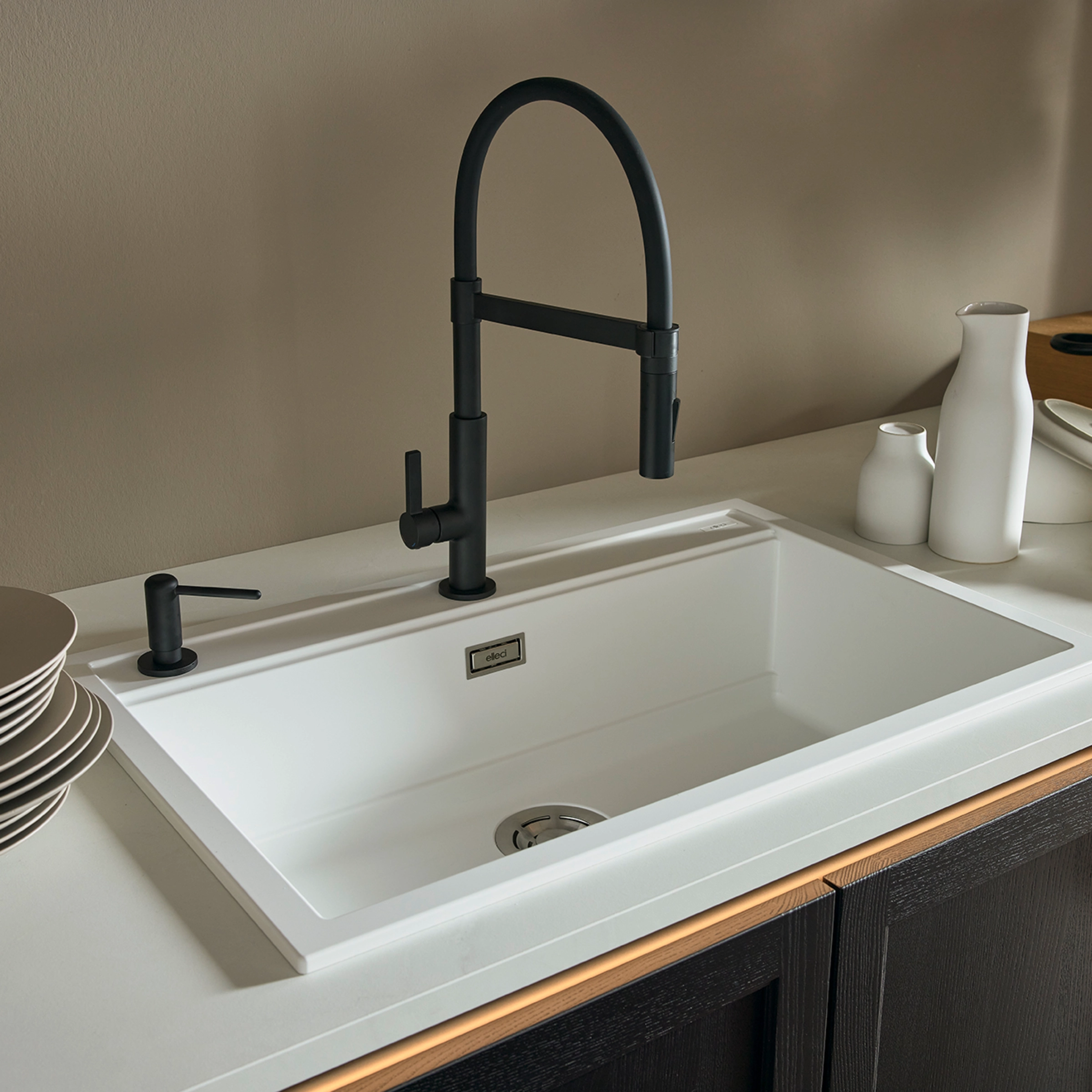
Is a kitchen faucet with a pull-out spray a good idea?
A kitchen faucet with a pull-out spray head offers more freedom of movement and can be particularly practical for large or deep sinks. The flexible hose makes it easier to rinse food and clean the sink, and allows you to fill large pots or containers with water more comfortably. Whether a pull-out faucet is a good choice therefore depends primarily on how the sink area is used. When planning a kitchen, you should also make sure to allow enough space for the hose beneath the faucet. For compact sink areas or primarily basic use, however, a classic faucet with a fixed spout may be sufficient.
What color should a kitchen faucet be?
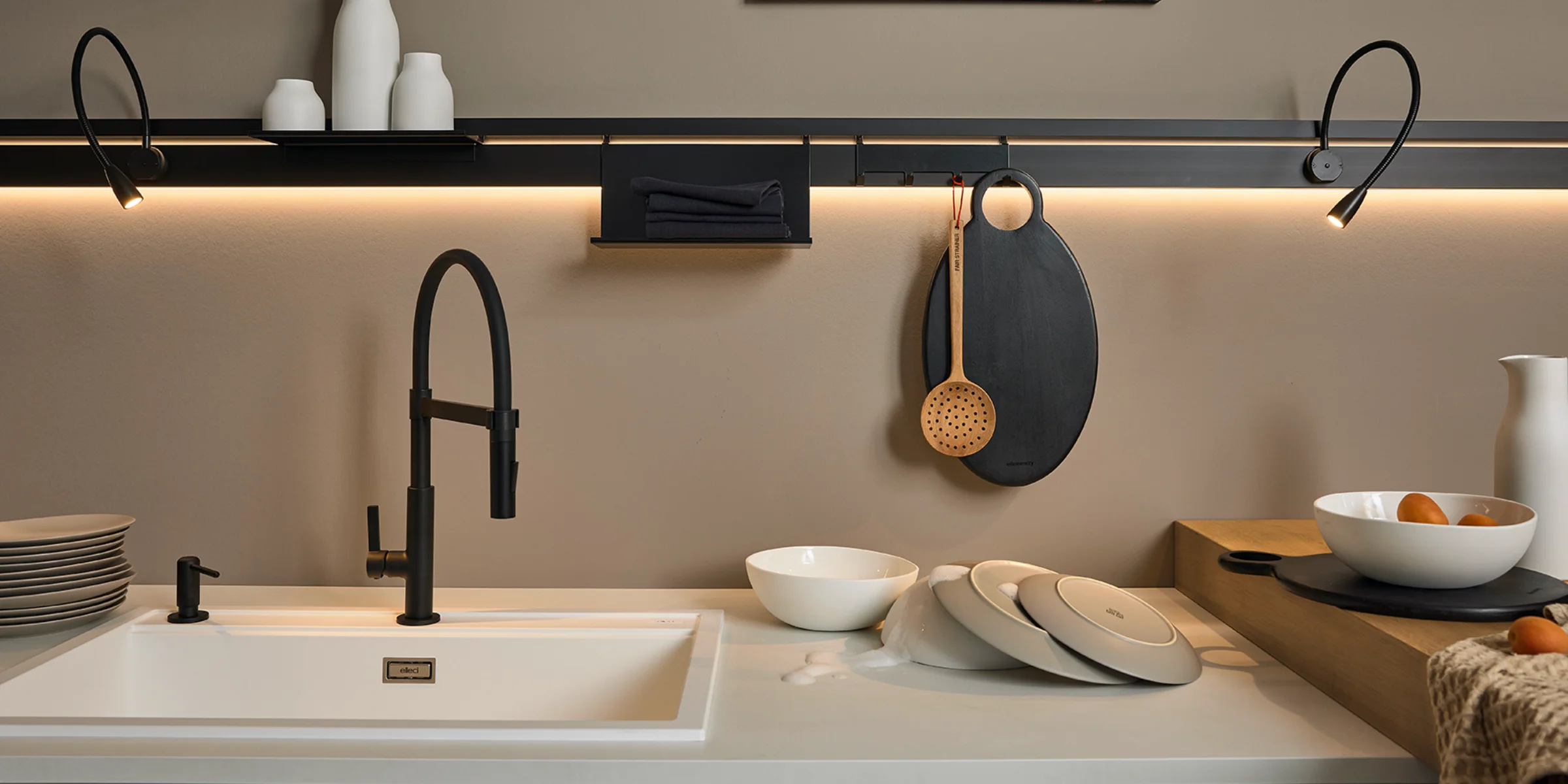
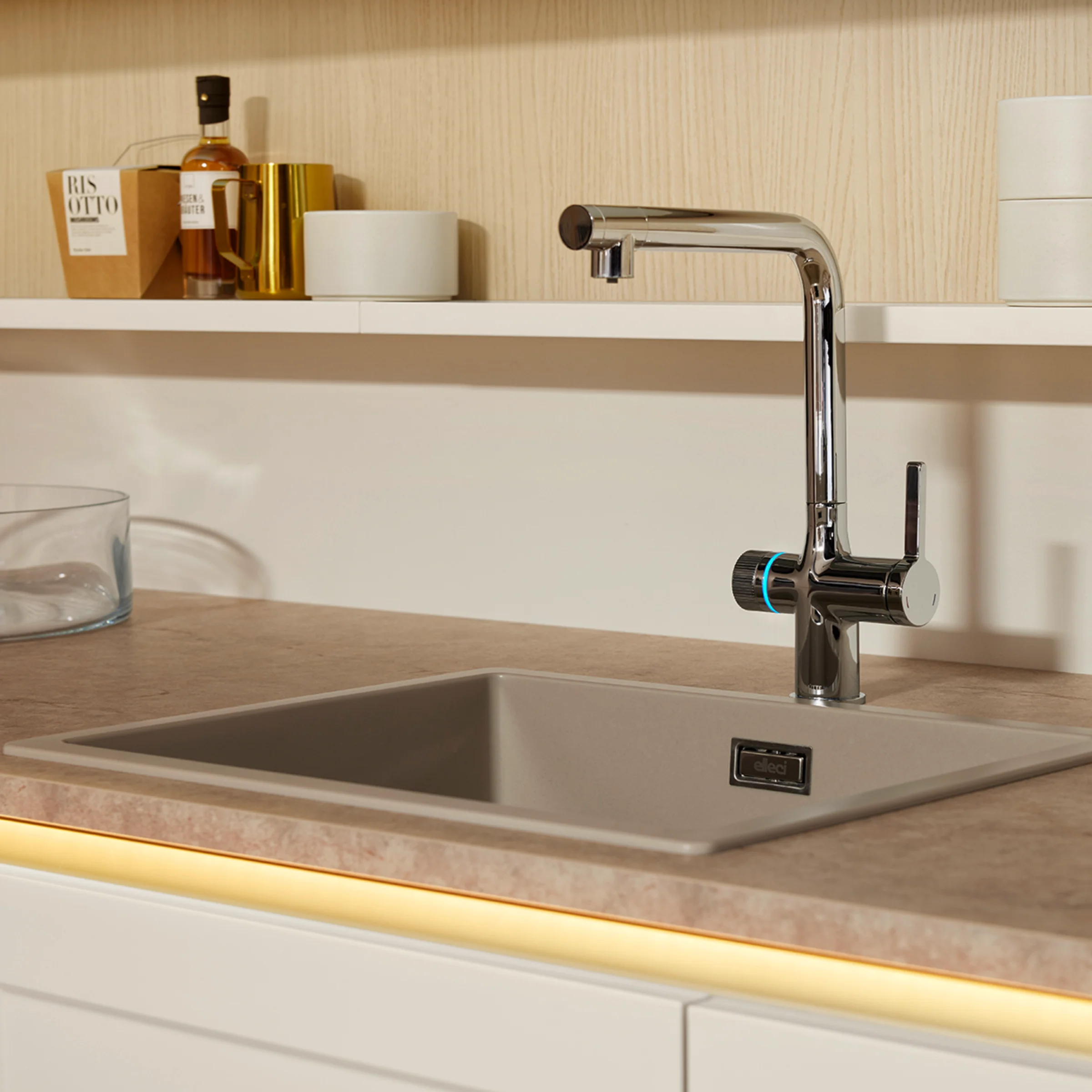
The color of the kitchen faucet should be coordinated with the sink, countertop, and the rest of the kitchen design. Stainless steel-colored faucets have a timeless look and can be combined with many materials and colors. Black or dark faucets can create deliberate contrasts or, when paired with a dark sink, contribute to a harmonious overall look. Likewise, the faucet can echo design details such as handles, appliances, or other metal elements in the kitchen. What matters most, therefore, is not so much a single “right” color as a harmonious interplay of materials, surfaces, and colors throughout the entire kitchen space.
How can you properly plan your kitchen sink and faucet?
The kitchen sink and faucet should be planned together with the countertop, water connection, and sink cabinet. In addition to aesthetics, ergonomics, space requirements, and technical specifications are particularly important.
Checklist for planning the sink area:
- Does the sink fit the existing base cabinet?
- Is the desired installation method suitable for the countertop?
- Have water connections and hot water supply been taken into account?
- Is a high-pressure or low-pressure faucet required?
- Can an existing window still be opened despite the faucet?
- Is there enough space for the trap and waste separation?
- Do the sink, faucet, and countertop coordinate well in terms of design?
When planning your kitchen, a nolte dealer will help you optimally coordinate the sink, faucet, countertop, and base cabinet while taking technical requirements into account.


FAQs
Frequently Asked Questions About Sinks & Faucets
More information
In our kitchen journal, you’ll find even more inspiration for planning and designing your dream kitchen.