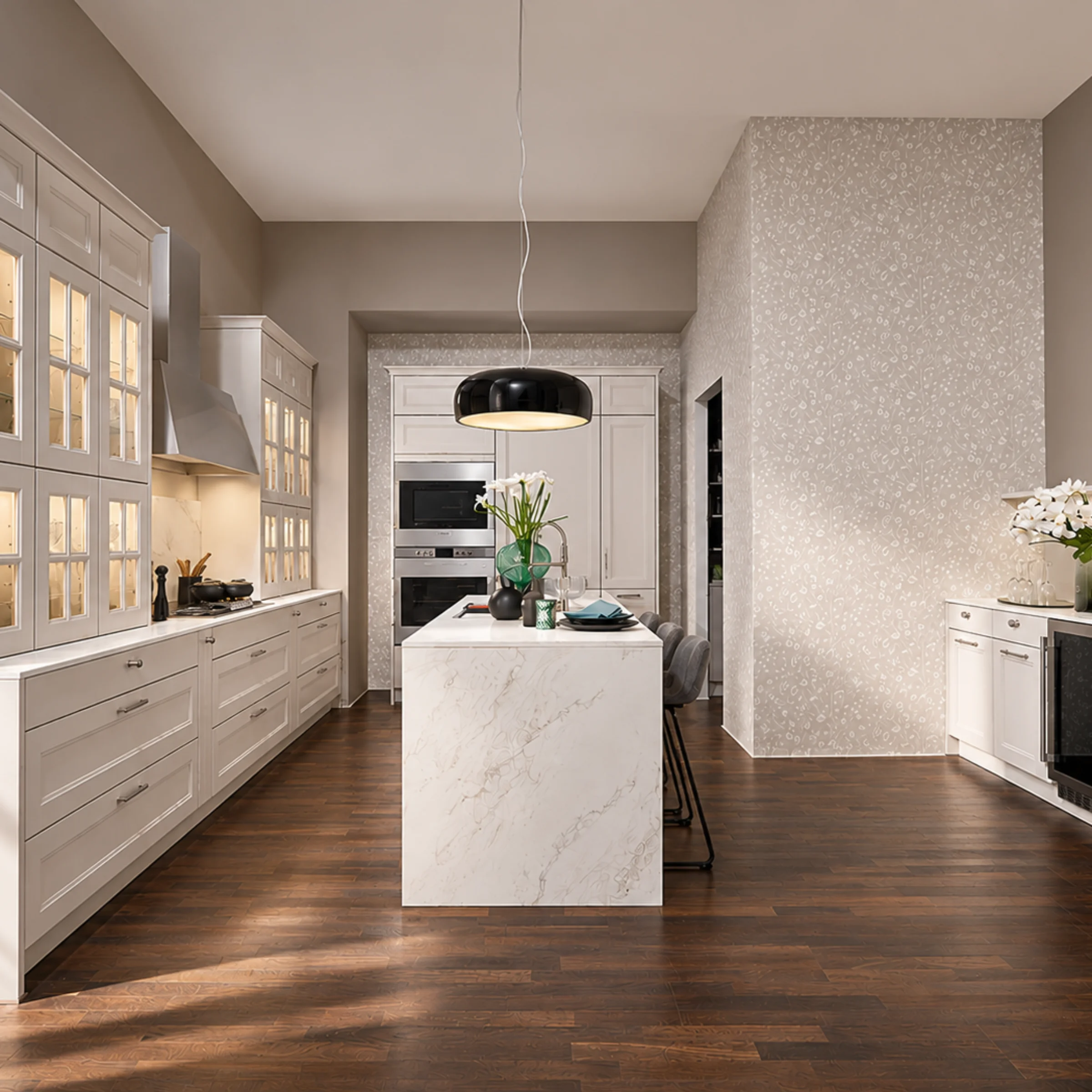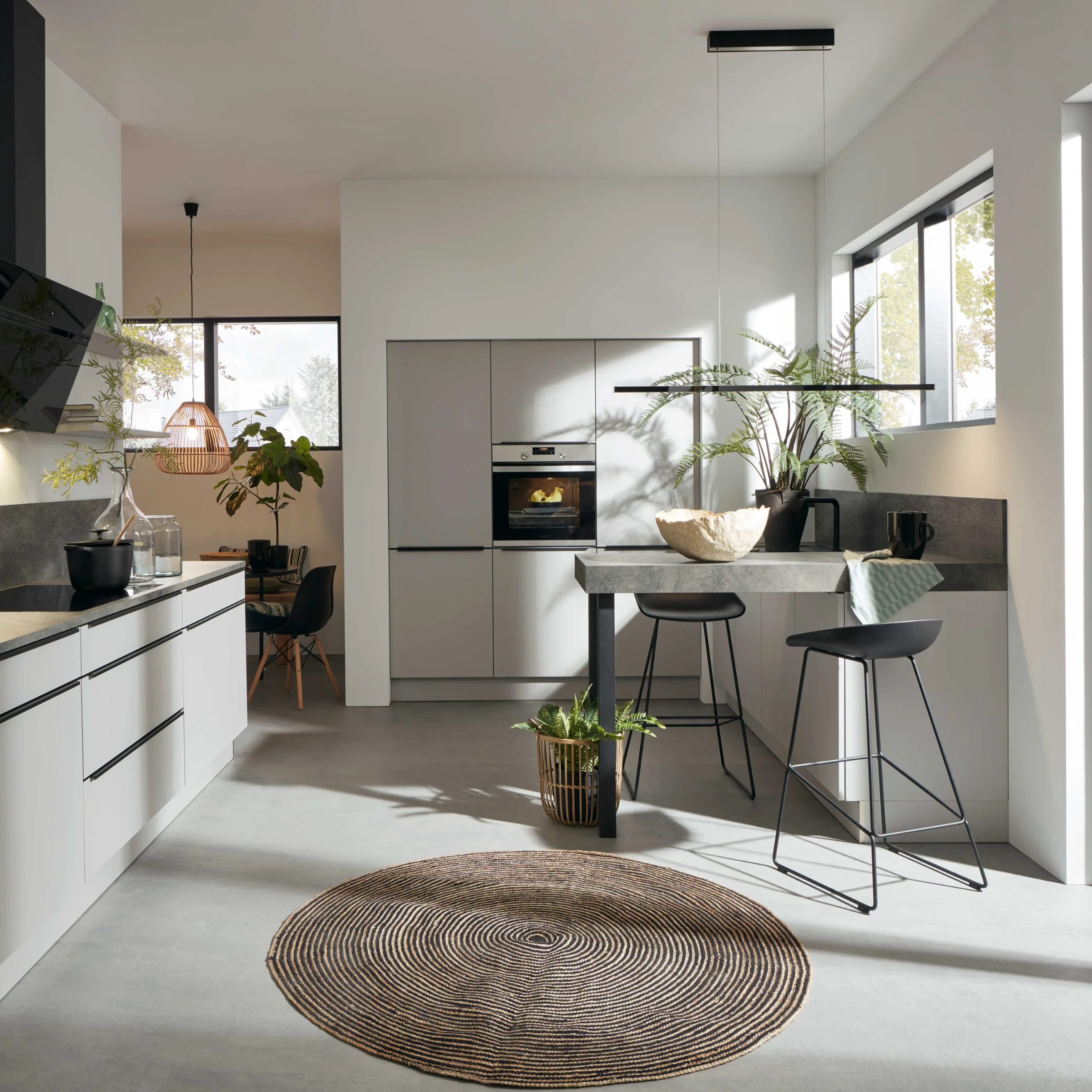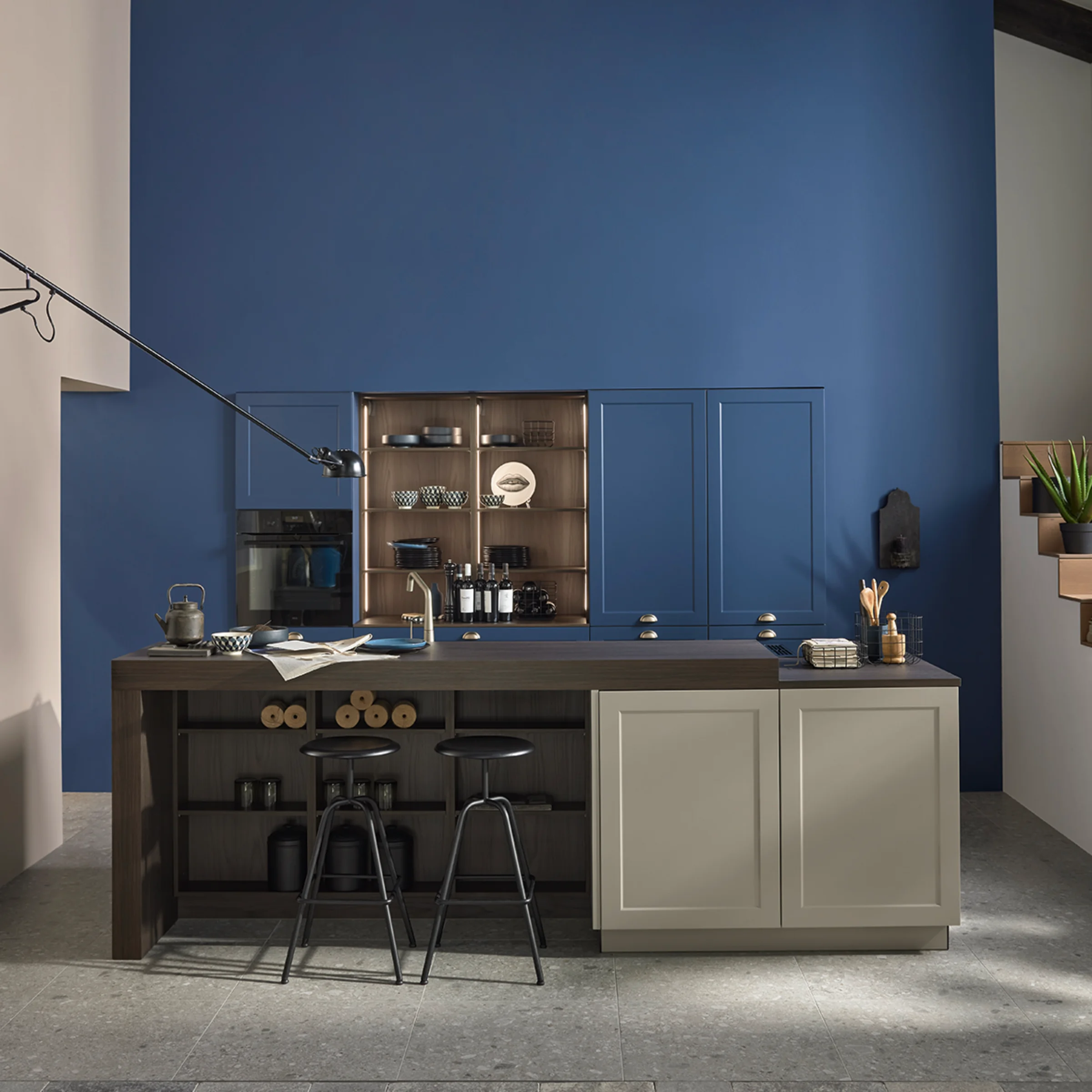
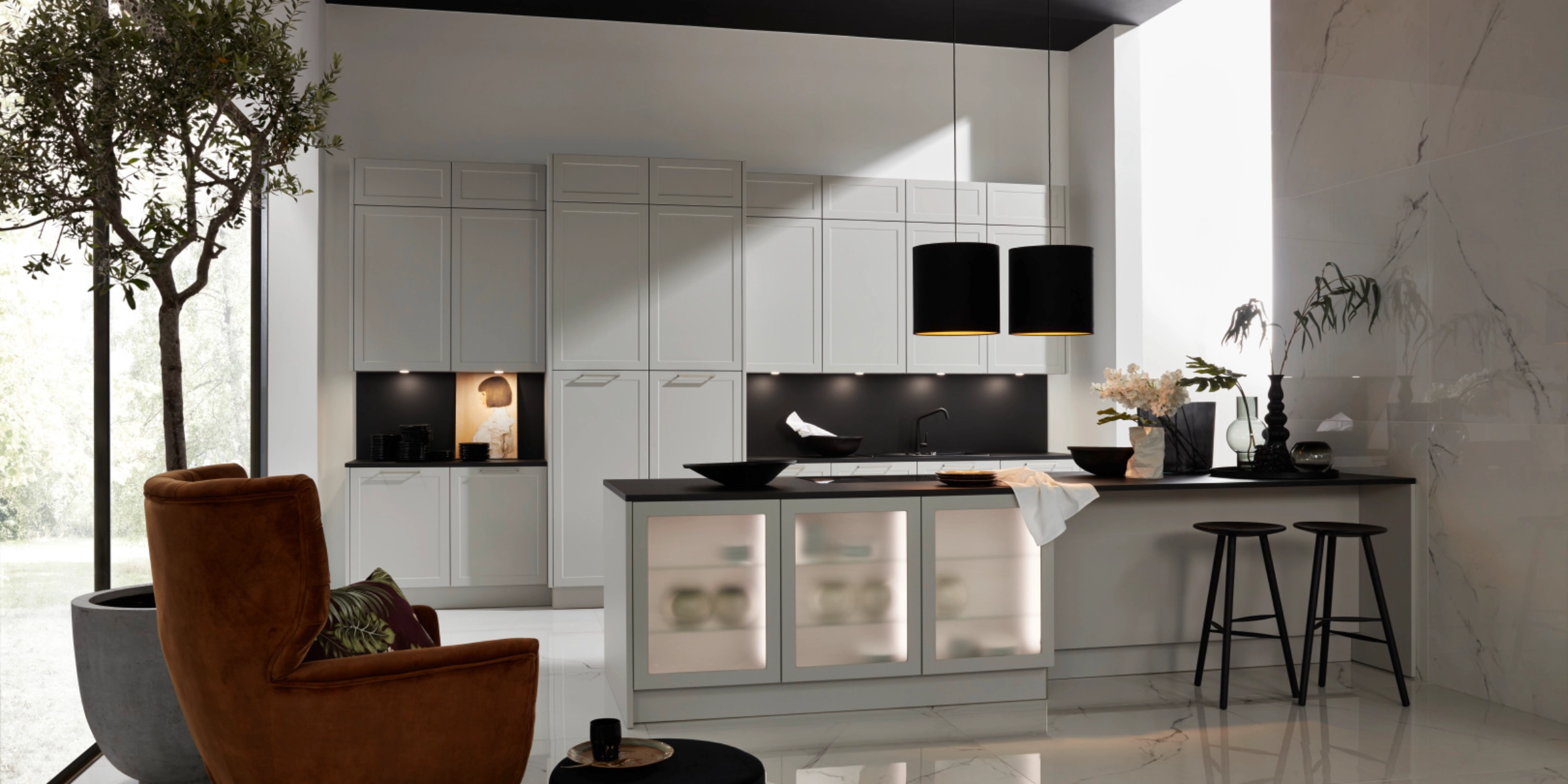
An open-concept kitchen-dining-living area combines the kitchen, dining area, and living room into a single living space. For successful planning, the most important factors are choosing the right kitchen layout, keeping walkways short, ensuring ample storage space, and creating a harmonious design. A kitchen island or counter can help define the space while also providing additional counter space and seating. When colors, materials, furniture, and lighting are coordinated, a seamless transition is created between the kitchen and living area.

Plan and design an open-plan kitchen
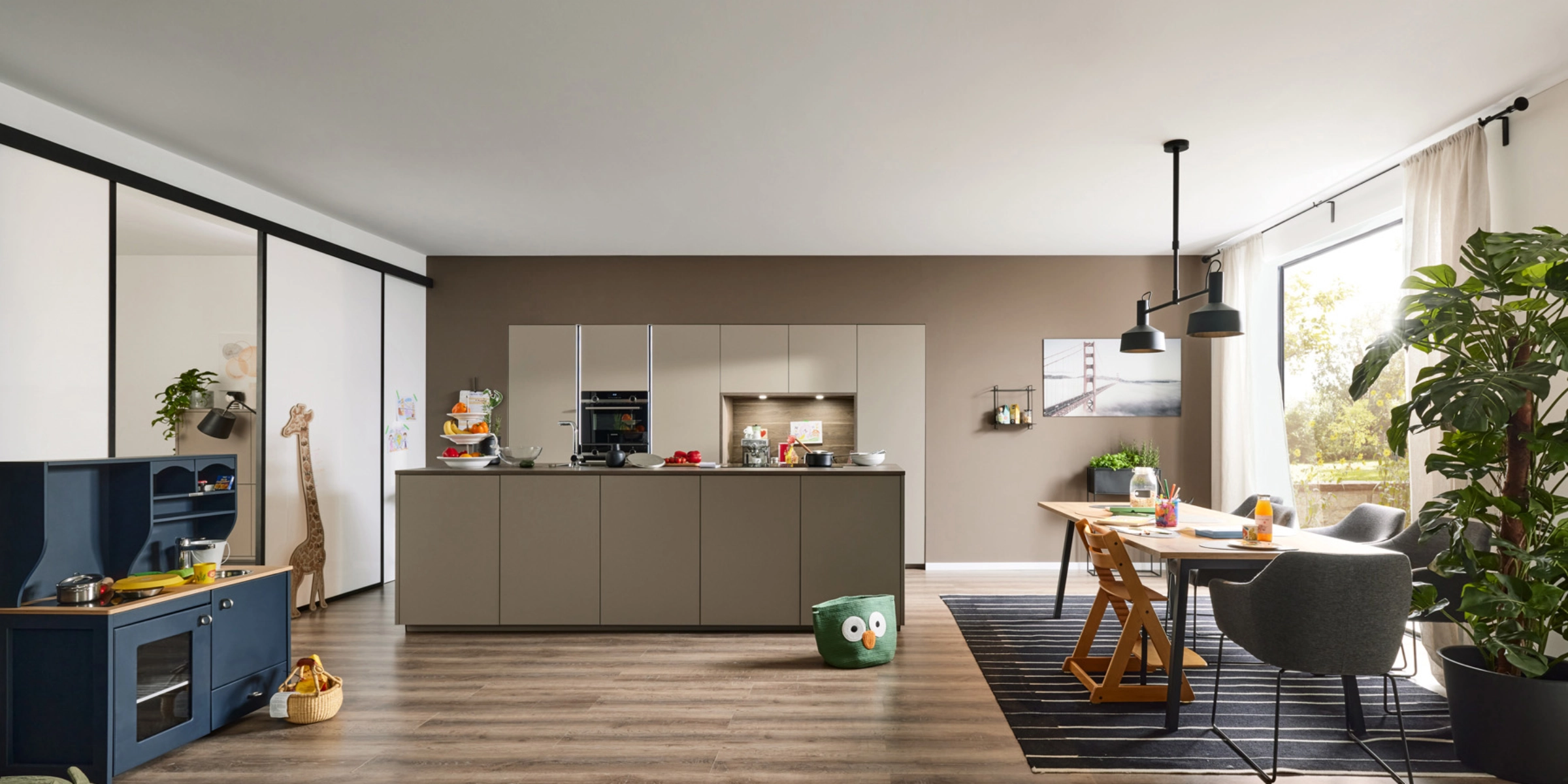
What is an open-concept kitchen-dining room?
An open-concept kitchen connects the kitchen to the dining or living area without fully separating walls. This creates a shared living space where cooking, dining, and living flow seamlessly into one another. Depending on the floor plan, an open-concept kitchen can be designed, for example, as a kitchenette, an L-shaped kitchen, or a kitchen with a freestanding island. It’s crucial not to focus solely on the actual kitchen area: walkways, seating, storage space, and the transitions to the adjacent living area should also be taken into account from the very beginning. An open-concept kitchen offers many design possibilities, especially for people who want to use their kitchen not only for cooking but also as a gathering place and the heart of their home.
What are the advantages of an open-concept kitchen and dining area?
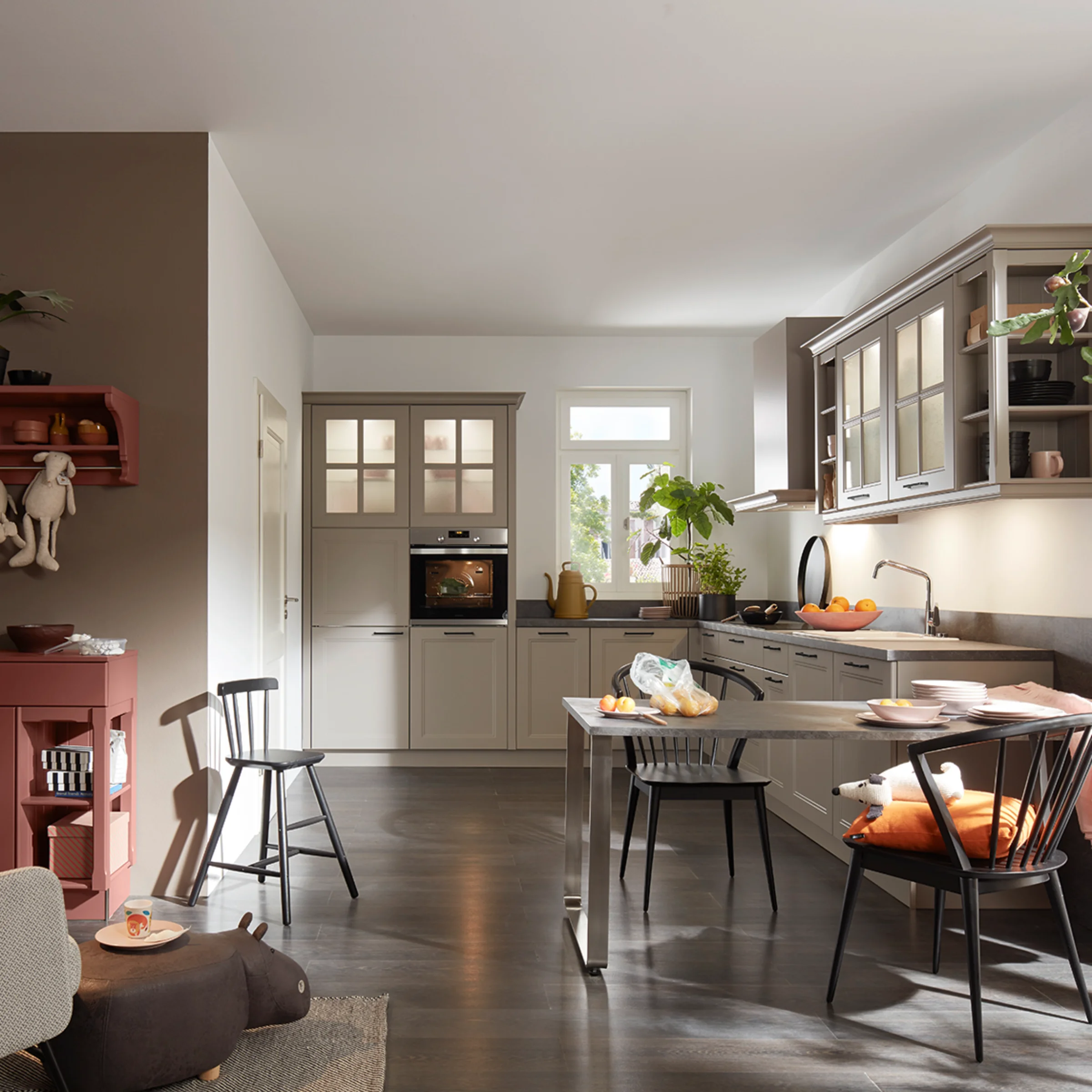
An open-concept kitchen creates a spacious feel and brings cooking, dining, and socializing together. When preparing or cooking a meal, you can stay connected with family and guests instead of being isolated in a separate room. At the same time, open floor plans allow for flexible transitions between the kitchen, dining area, and living room. A kitchen island or counter can provide additional counter space, storage, and seating while also serving as a gathering spot. The open concept also offers design advantages: When colors, materials, and furniture are coordinated, the kitchen and living area can appear to flow seamlessly together. This way, the kitchen becomes not just a functional workspace but a central part of daily life.
Advantages of an open-concept kitchen at a glance:
- a spacious, open feel
- more interaction while cooking
- seamless transition between the kitchen, dining, and living areas
- flexible design of the dining area and seating options
- Kitchen island as a work surface, storage space, and gathering place
- Seamless design connecting the kitchen and living area
What are the disadvantages of an open kitchen?
In an open-concept kitchen, noise, cooking odors, and clutter are more noticeable in the living area. Therefore, these factors should be taken into account early on in the kitchen planning process. High-performance range hood solutions can help reduce cooking fumes and odors, while quiet appliances make the background noise in the open space more pleasant. Equally important is having sufficient closed storage space: kitchen utensils, pantry items, and small appliances can be quickly stowed away and remain out of constant view from the living area. Since the kitchen is part of the overall living space, cabinet fronts, countertops, colors, and lighting should also complement the adjacent dining and living areas. Careful planning can significantly reduce many of the typical drawbacks of an open kitchen.
Disadvantages of an open-concept kitchen at a glance:
- Cooking odors spread more easily into the living area
- Noises from kitchen appliances are more noticeable
- Clutter and used countertops remain visible
- The kitchen and living area require a coordinated design
- Storage space and the range hood should be planned with particular care
How do you properly plan an open-concept kitchen and living room?
An open-concept kitchen should be designed as a combined kitchen, dining, and living space, rather than as an isolated kitchen area. Therefore, it’s important to determine at the outset how many people will use the kitchen, what functions it should serve, and how much storage space is needed. The desired kitchen layout, appliances, dining areas, and traffic flow also influence the design. The internal nolte planning brochure addresses precisely these questions and distinguishes, for example, between a kitchen for cooking, a kitchen for cooking and dining, or a kitchen as the heart of the home. By defining these requirements before the actual design process begins, you can tailor work areas, cabinets, and transitions to the living space more specifically to your personal daily routine.


nolte Expert Tip
Plan your kitchen, dining area, and living area together from the very beginning. This way, you can optimally coordinate traffic flow, storage space, and seating arrangements.
Clarify the following before planning:
- How many people use the kitchen?
- Will meals be eaten in the kitchen?
- Would you like a kitchen island?
- How much storage space is needed?
- Which appliances should be built-in?
- What are the walking distances between cooking, washing dishes, and food prep?
- How should the kitchen and living area be visually connected?
What type of kitchen layout is best for an open-concept kitchen-dining area?
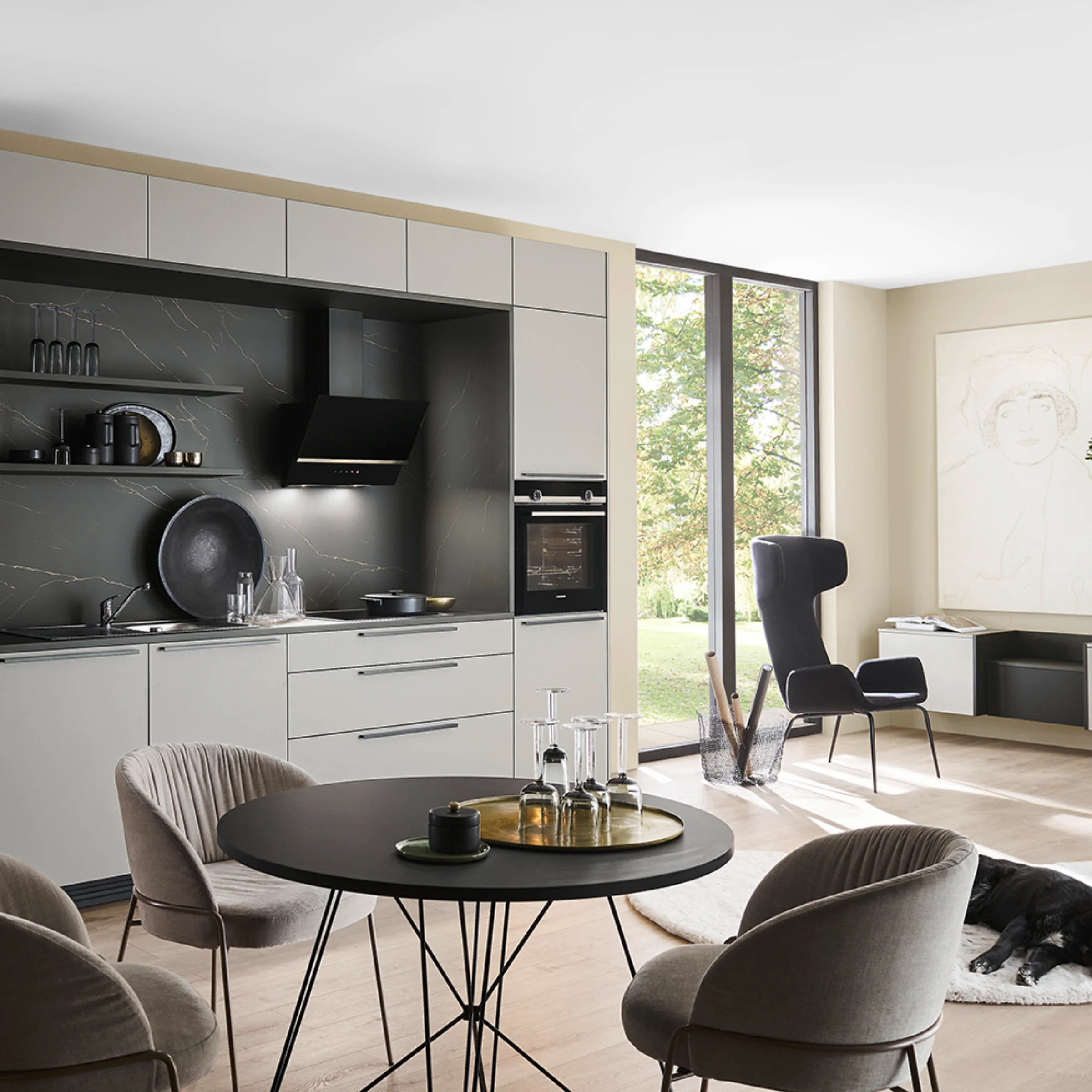
Various kitchen layouts are suitable for an open-concept kitchen—the key factors are the floor plan, available space, and personal usage. A galley kitchen requires comparatively little space and can therefore be suitable even for smaller open floor plans. An L-shaped kitchen utilizes two adjacent walls and leaves the transition to the living area largely open. If more space is available, a kitchen island can visually separate the cooking area from the living area without adding a wall. It can also be combined with counter space, storage, or seating. In its kitchen planning, nolte considers, among other options, galley, L-shaped, and U-shaped kitchens, as well as solutions featuring an island, a counter, or an attached table.
nolte Expert Tip
When planning a kitchen island, first consider what function it should serve: counter space, storage, a cooking area, or a gathering spot with seating.
How can a kitchen island be integrated into an open-concept kitchen-living room?
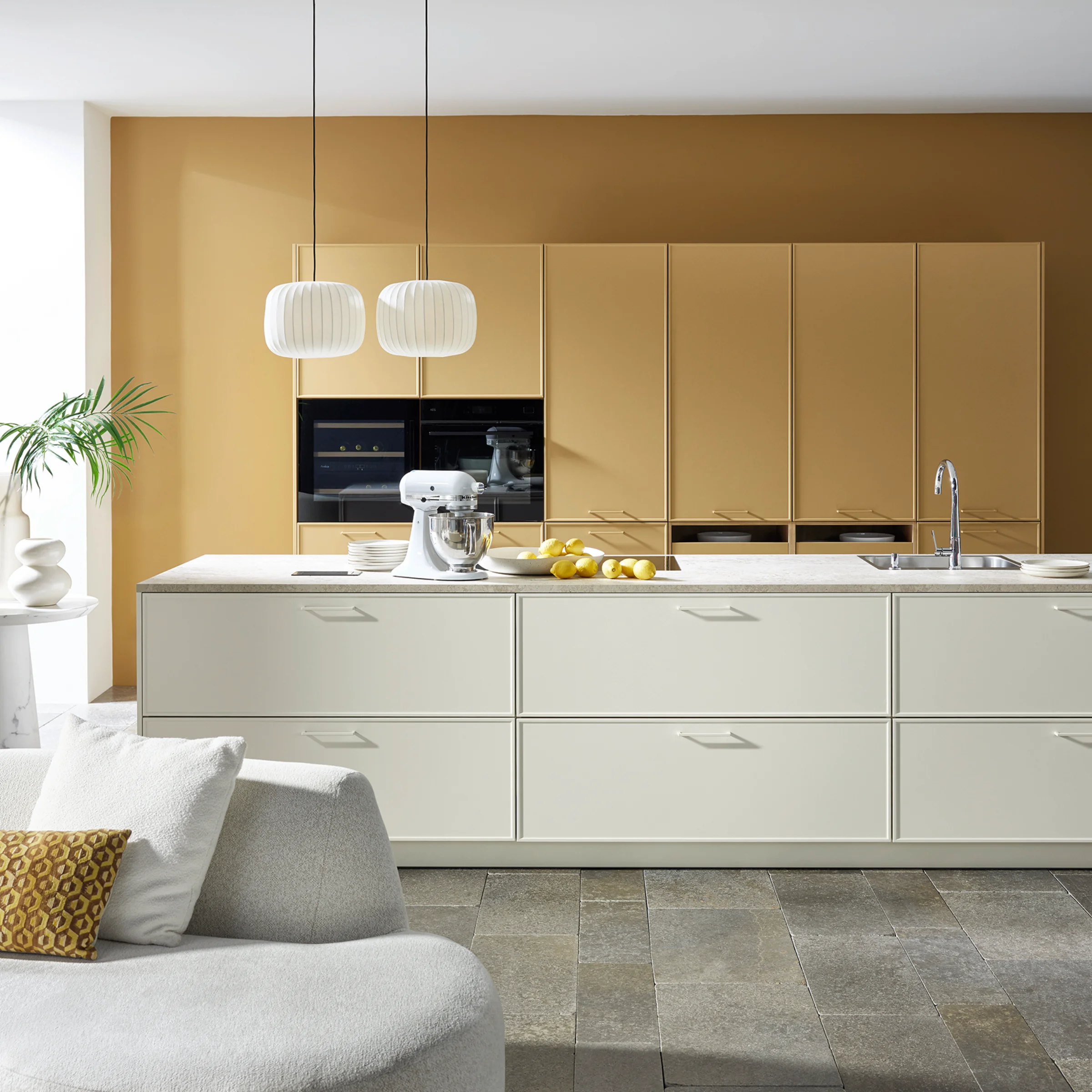
A kitchen island can help organize an open-concept kitchen-dining area while also providing additional counter space, storage, or seating. The best design depends primarily on the island’s intended function. If the island will be used for cooking or washing dishes, the necessary utility connections must be planned for early on. A work-only island, on the other hand, can often be positioned more flexibly. With an attached counter or table, the island can also become a social hub. Especially in open floor plans, it thus serves a dual purpose: it visually separates the kitchen area from the dining or living room while maintaining the visual and communication lines between the different areas.
How much storage space does an open-concept kitchen need?
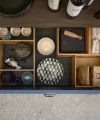
An open-concept kitchen-living room needs sufficient, well-organized storage space because cabinets and countertops are constantly visible from the living area. How much space is actually needed depends on household size, cooking habits, pantry supplies, and existing appliances. Closed cabinets and pull-out drawers help keep kitchen utensils out of sight quickly and maintain a calm overall look. At the same time, frequently used items should be stored as close as possible to their respective work areas. nolte’s interior organization guidelines recommend, for example, placing cooking utensils near the stovetop and ingredients for food preparation near the sink and trash disposal. This minimizes walking distances and creates a more fluid workflow.
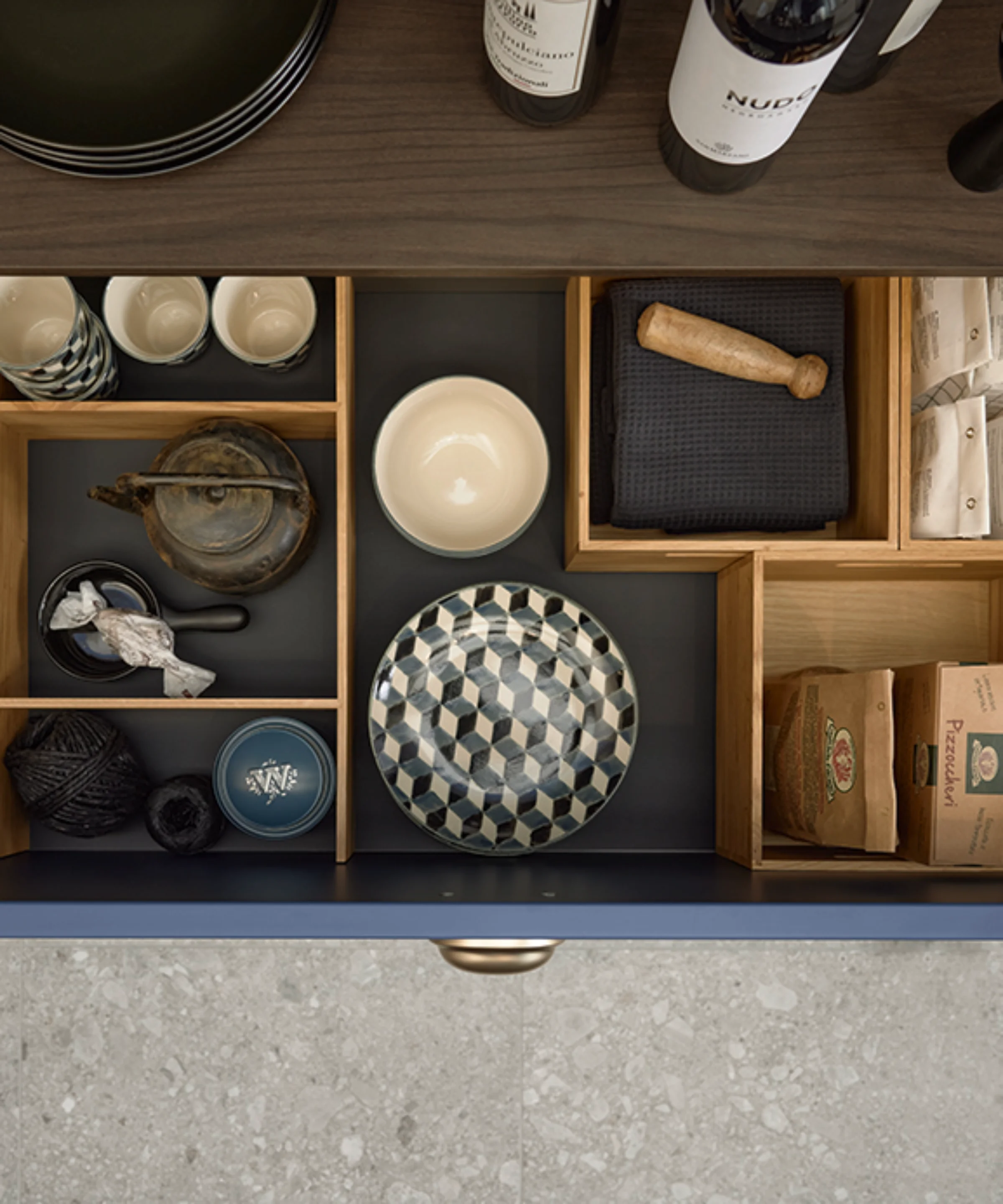


nolte Expert Tip
Plan storage space according to work areas: Cooking utensils should be kept close to the stovetop, and ingredients for food preparation should be stored as close as possible to the sink and trash disposal system.
How can you visually connect an open-concept kitchen and living room?
An open-concept kitchen and living room look particularly harmonious when colors, materials, and design elements are repeated in both areas. For example, a wood finish from the kitchen can be carried over to shelves or living room furniture, while similar colors for cabinet fronts, walls, or furniture create additional visual connections. With nolte LIVING, this principle can be purposefully extended: lowboards, sideboards, highboards, and shelves allow for a coordinated design that extends beyond the kitchen itself. This way, the kitchen, dining area, and living room can be planned as a cohesive living concept without all areas having to look identical. Instead, recurring design elements provide a recognizable common thread and a seamless transition between the individual living areas.
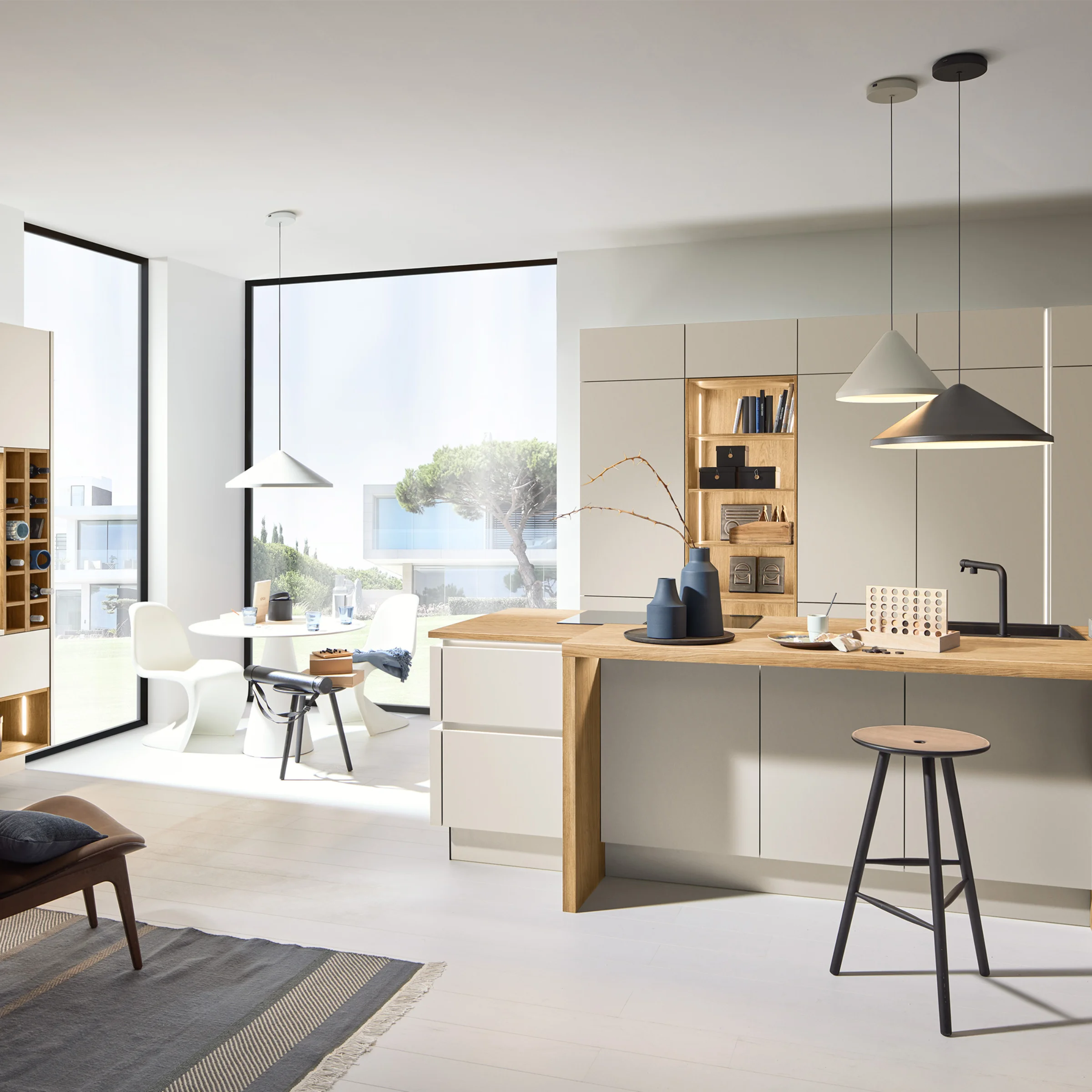
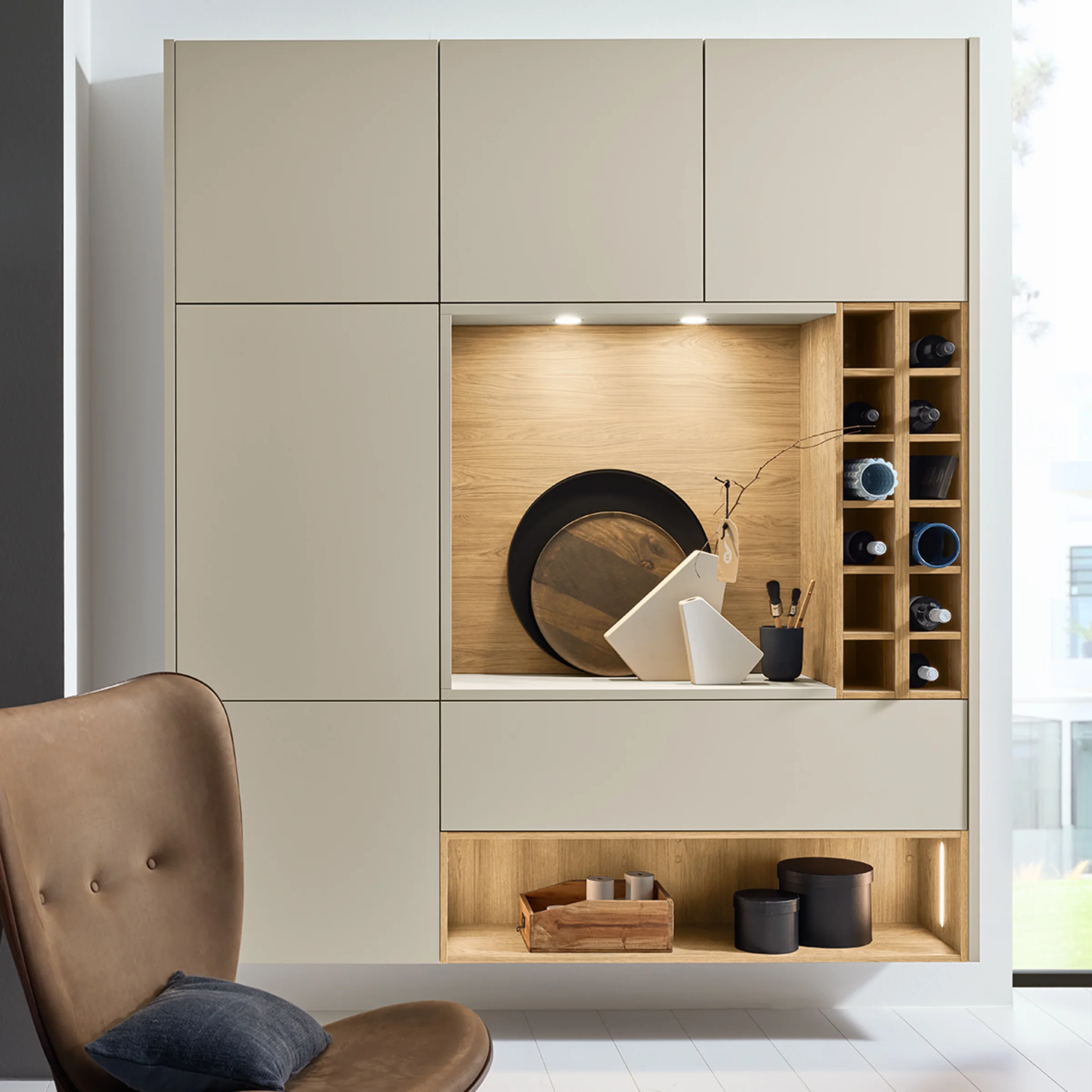
nolte Expert Tip
Incorporate the colors and materials from the kitchen into the living area. Coordinating shelves, sideboards, or living room furniture create a harmonious transition.
What colors and materials are best suited for an open-concept kitchen-living room?
For an open-concept kitchen-living room, choose colors and materials that complement both the kitchen and the adjacent living area. Wood-look finishes can bring warmth and a natural feel to the space, while subtle matte colors create a understated backdrop. Contrasts can be introduced, for example, through countertops, handles, niches, or individual pieces of furniture. An open floor plan looks particularly harmonious when selected finishes are repeated in several places. For example, a wood finish from the kitchen can be echoed in a sideboard or shelf in the living area. The key is not so much to use the same finishes everywhere, but rather to visually connect the kitchen, dining area, and living room through recurring colors and materials.
What kind of lighting does an open-concept kitchen and living room need?
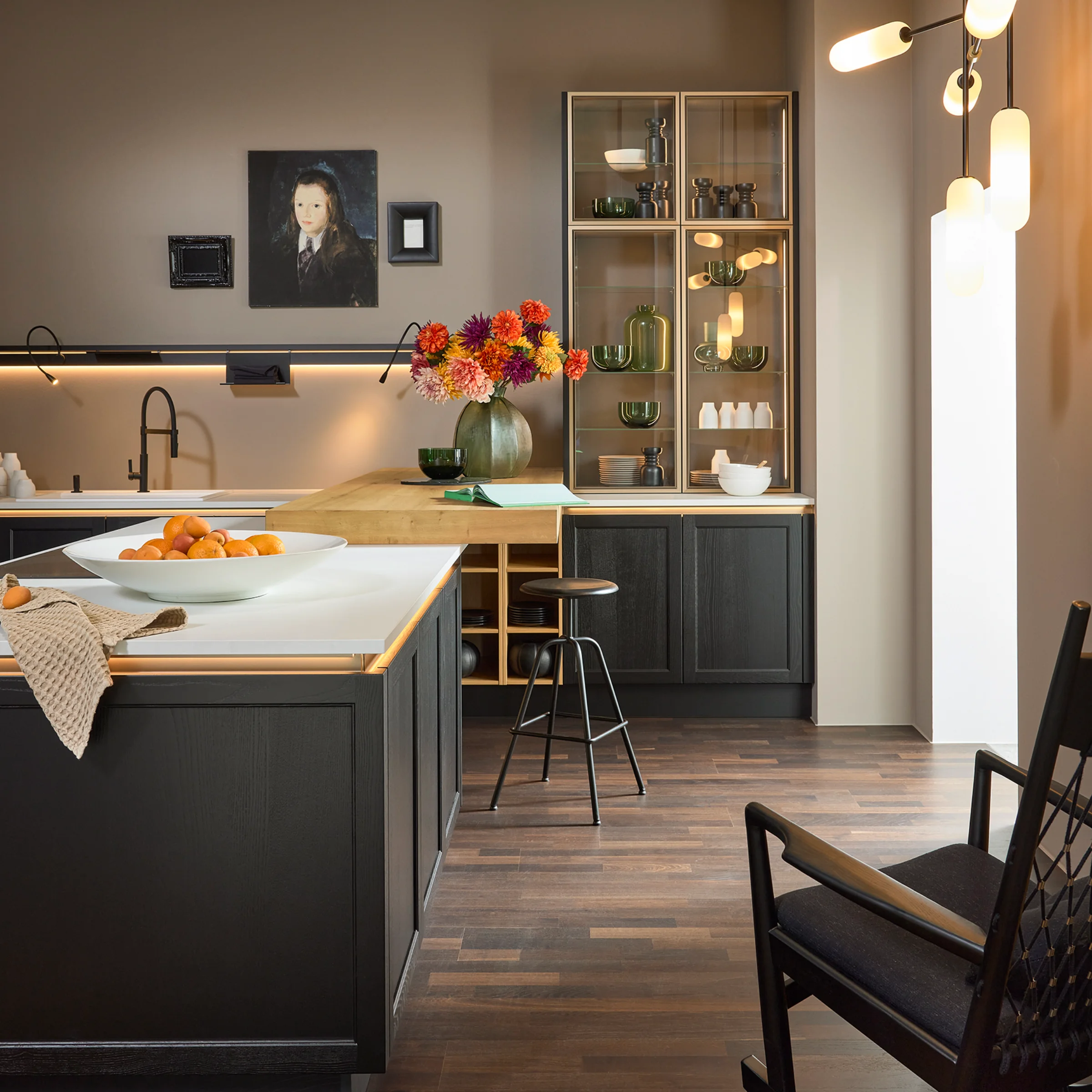
An open-concept kitchen-dining area requires both functional task lighting and ambient lighting for the dining and living areas. Countertops, the stovetop, and the sink should be adequately and as evenly lit as possible to ensure that kitchen tasks can be performed safely and comfortably. To create a cozy atmosphere, pendant lights above the kitchen island or dining table can be complemented by illuminated shelves and indirect light sources. A variety of light sources makes it possible to adapt the lighting to the situation at hand—from cooking and dining together to a relaxing evening in the living area. The nolte planning documents also incorporate a lighting concept that combines functional lighting with a sense of space and well-being.
Small Places. Big Ideas.
Is an open-concept kitchen-dining room suitable for small spaces as well?
Yes, an open-concept kitchen-dining area can also be a good solution for small spaces, because eliminating additional partition walls can make the floor plan feel more spacious. The key is compact planning that makes the most efficient use of the available space. Instead of a large kitchen island, for example, a kitchen galley, an L-shaped kitchen, or a space-saving counter solution can be practical. Additional storage space can be created through taller cabinets and making full use of the room’s height, among other things. The nolte design concepts “Small Places – Big Ideas,” for example, show how cooking, working, and living can be combined even in a limited space.
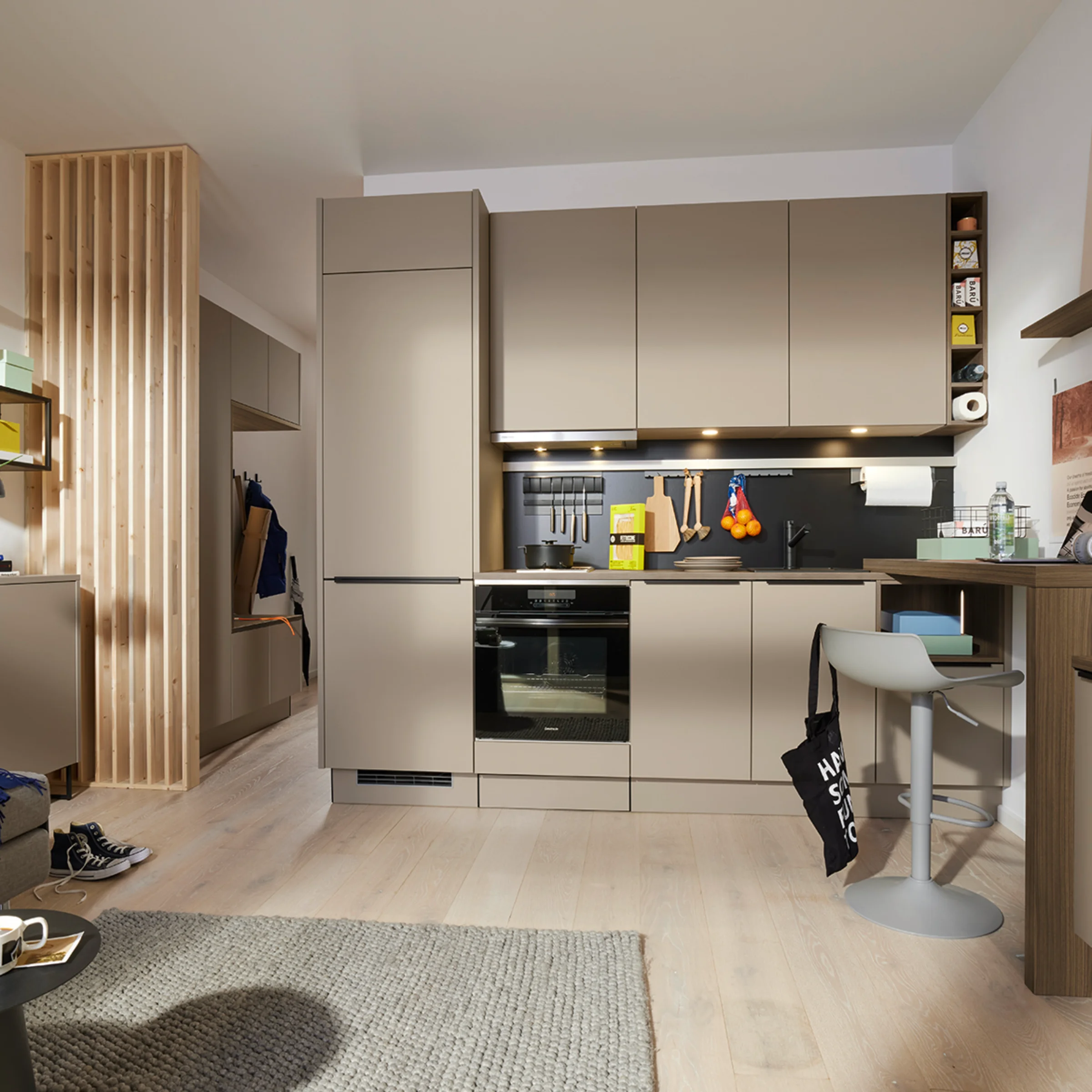
What are some ideas for designing an open-concept kitchen-dining area?
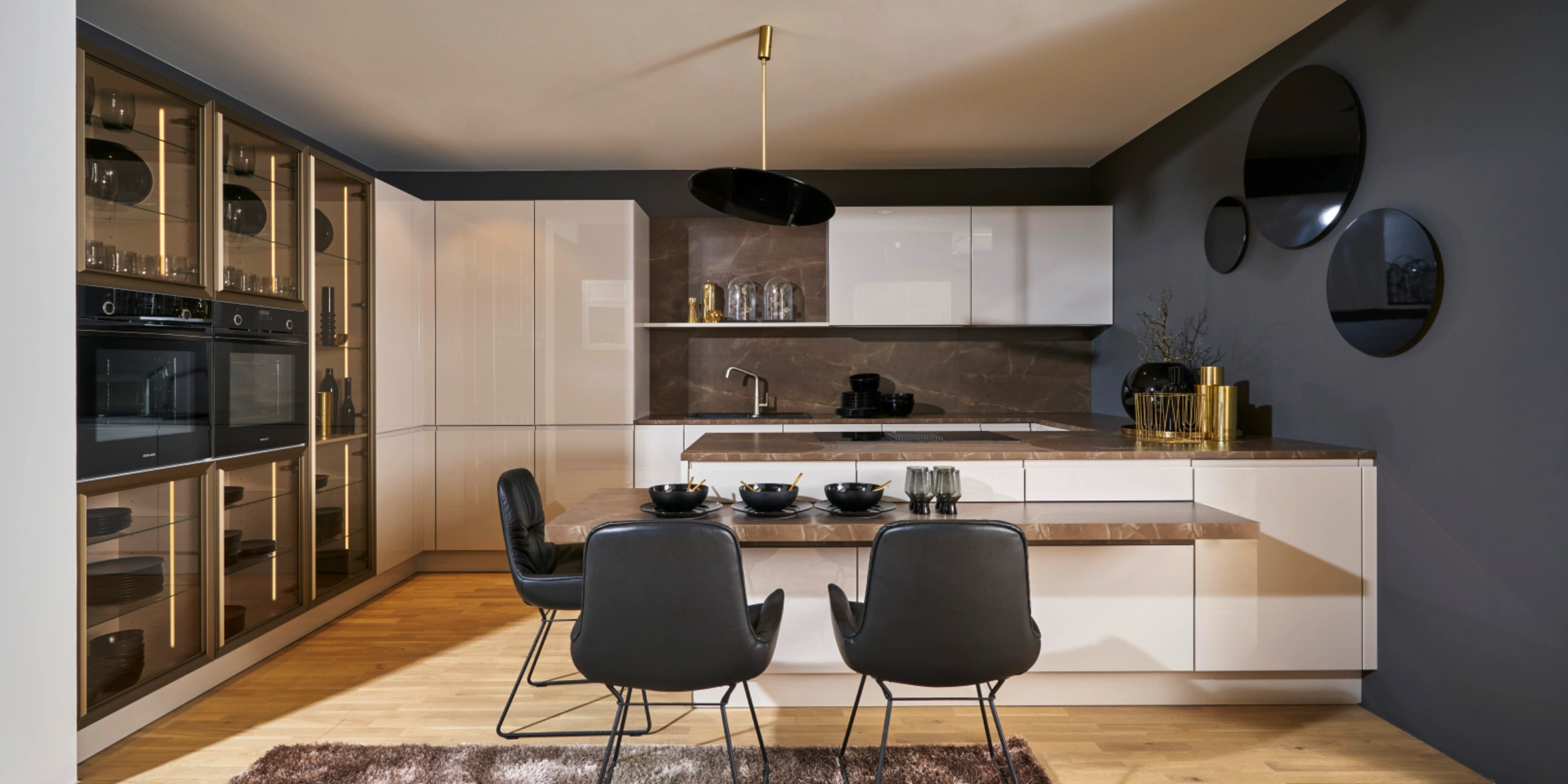
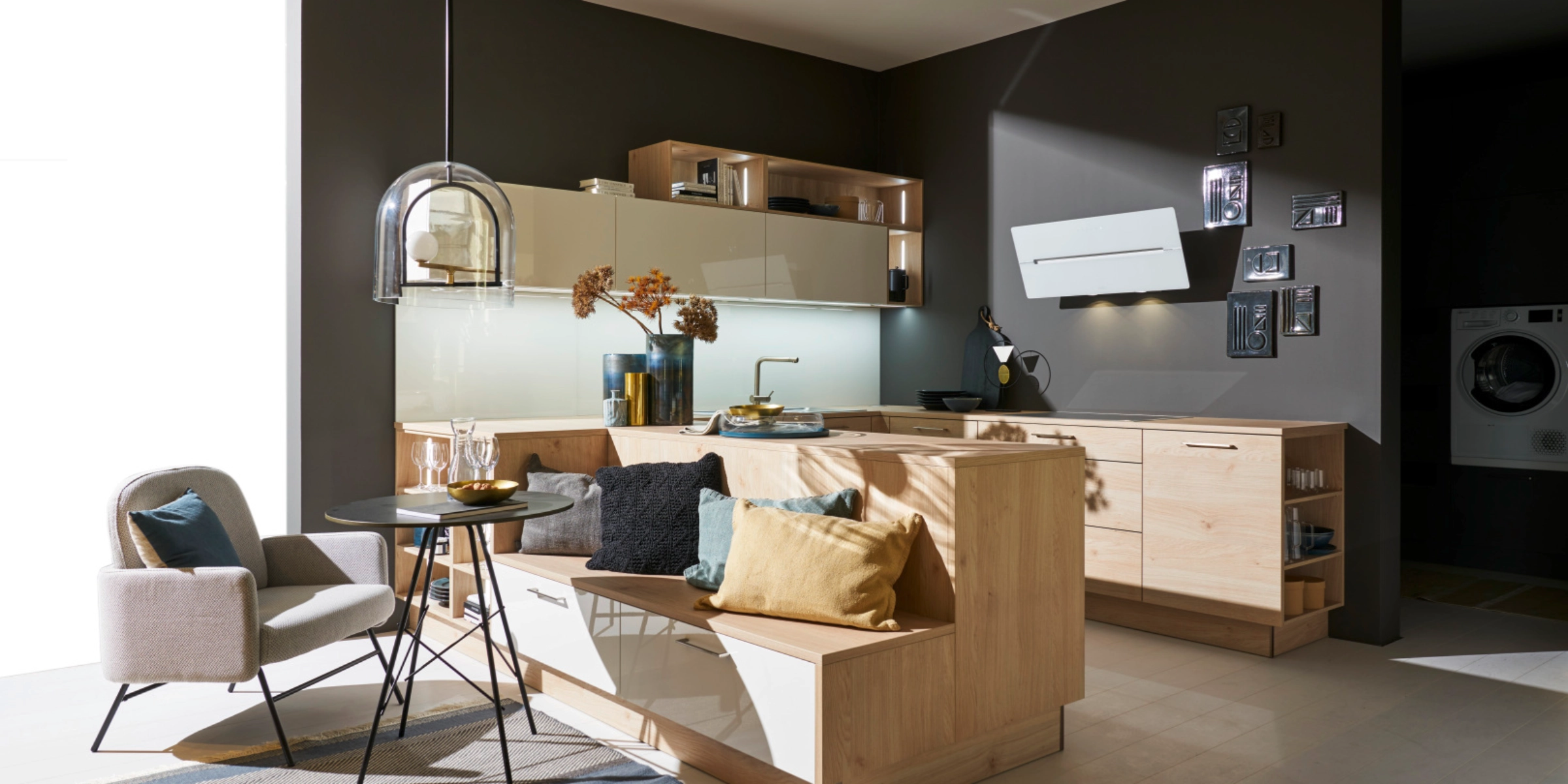
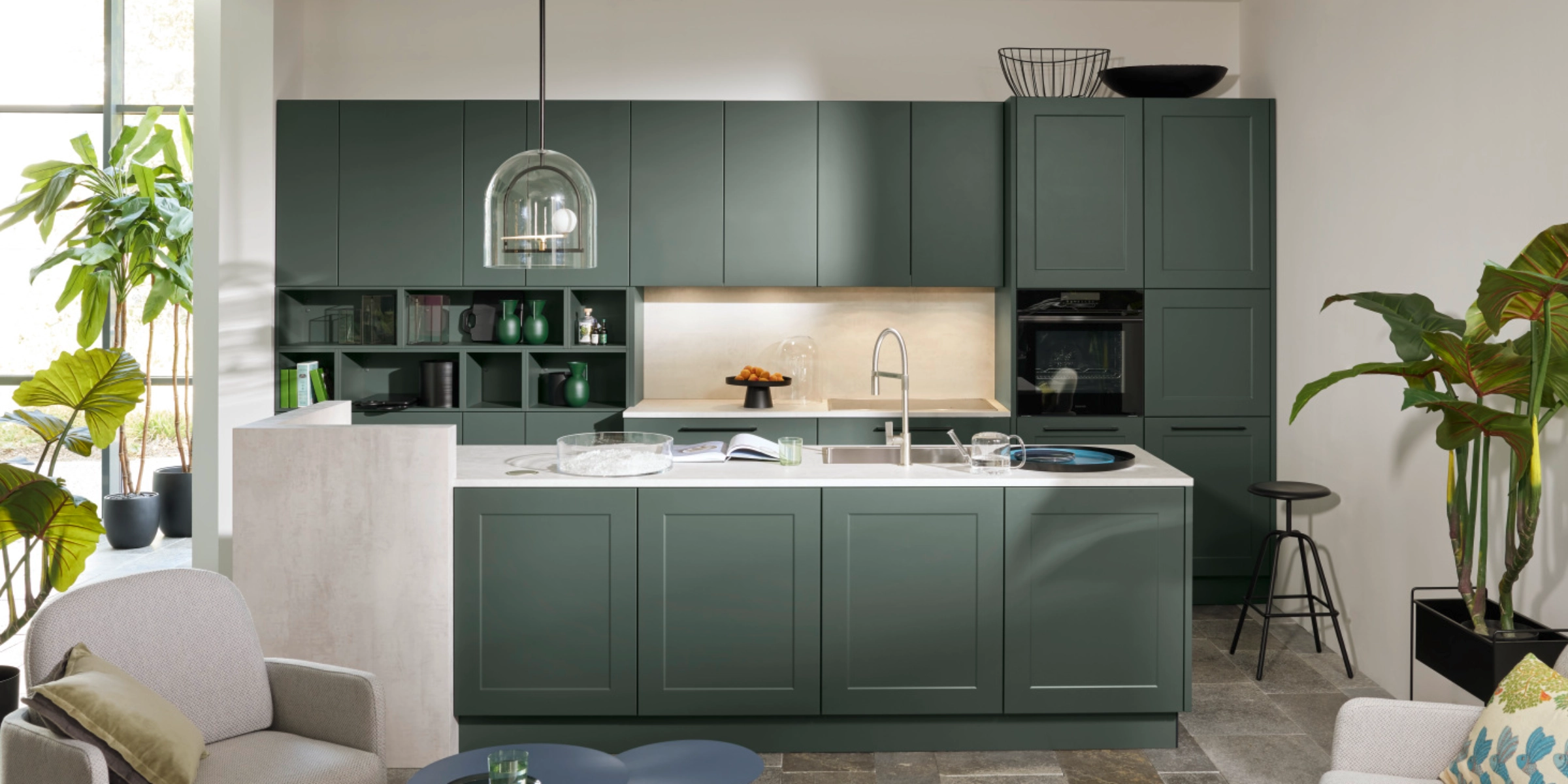
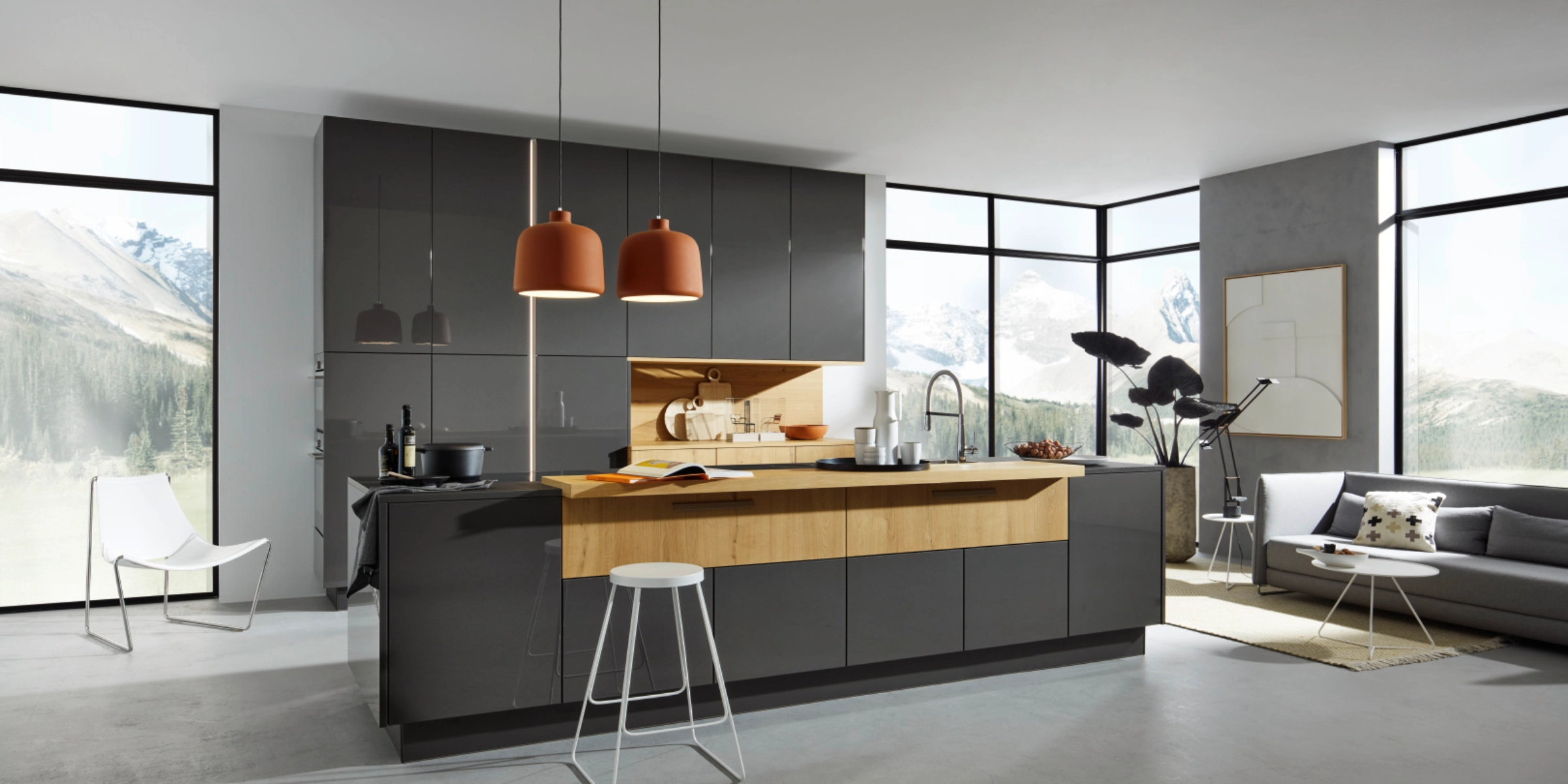
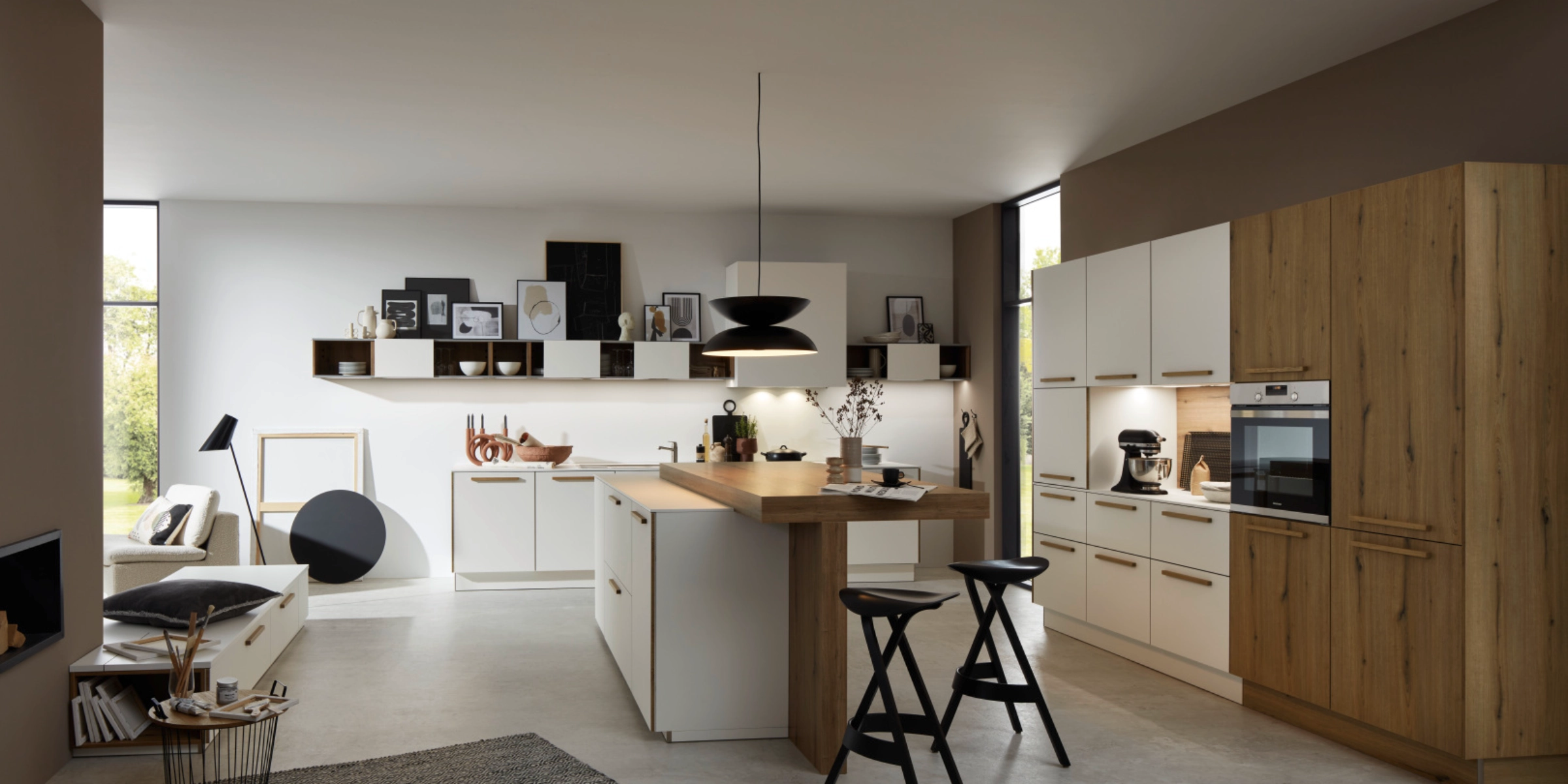
Open-concept kitchens can be designed in a variety of styles, ranging from natural and Scandinavian to modern, elegant, or full of contrast. The key to achieving a harmonious overall look is ensuring that the kitchen and living area complement each other design-wise. Light-colored cabinet fronts and wood-look finishes, for example, can create a calm, cozy atmosphere, while dark surfaces or striking materials introduce deliberate contrasts. Kitchen islands, dining areas, lighting, and living room furniture also influence the overall effect. The various design options show that an open-concept kitchen is not tied to a specific interior design style. Rather, kitchen cabinet fronts, countertops, handles, colors, and furniture can be combined in such a way that the open space complements your personal living style.
FAQs
What should you know about open-concept kitchens?
More information
In our kitchen journal, you’ll find even more inspiration for planning and designing your dream kitchen.

Discover tips and tricks
Discover many more tips and tricks in the nolte Magazin.